
_('Yarn')
Journal

Textile recycling partnership

It is common knowledge that the fashion and furnishing textiles industries are large global polluters, from the growing of plants like cotton, to the dying of yarns, and the amount of product sent to landfill, there are many areas in which change is urgently required. As a furnishing textiles distributor, we recognise that while we are a small contributor in terms of global pollution, we have a role to play locally and are actively working to be at the forefront of a more sustainable industry

Textiles are a necessity to modern living. They protect our homes and bodies from the elements, offer privacy from onlookers, soundproof close quarters, and bring joy to our lives through creative self-expression. These factors amount to a high standard of living, bringing value and beauty into our lives. 
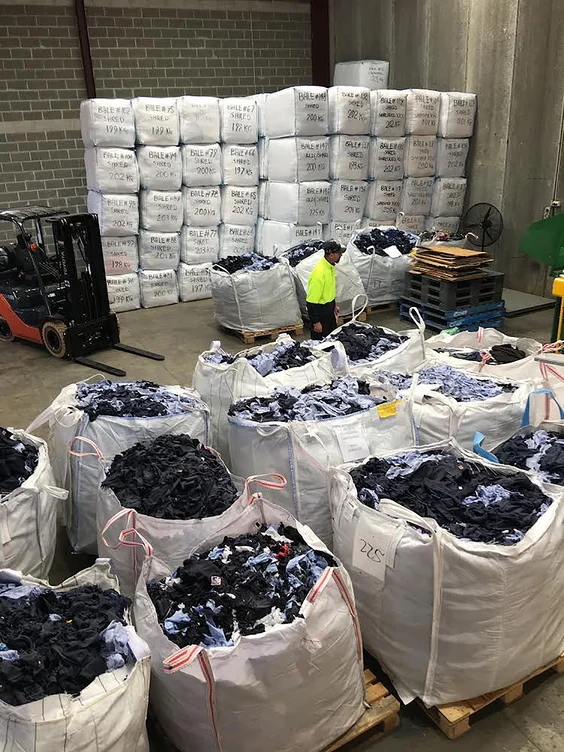
TRAKS Textile Recycling Program

In late 2021 the James Dunlop Group became an official partner of TRAKS; a collaboration between Textiles Recyclers Australia and Karie Soehardi Consultancy. TRAKS are currently working alongside textile brands like Sheridan to redirect 30 tonnes worth of textiles from landfill each year. By supporting the recycling and repurposing of textiles through their depots in Victoria and New South Wales, TRAKS provide employment to people both in Australia and abroad. 

“It’s disheartening to see our valuable fabrics going to waste and we know our customers are increasingly worried about unsustainable manufacturing practices. By joining TRAKS, we are not only helping to forge a viable resource recovery pathway for our unwanted materials but setting up these important recycling routes for the entire textiles industry to follow,” says Andrew Mills, Managing Director of James Dunlop Textiles Australia.

Creating a circular economy

Textile recycling is a crucial step in creating a circular economy as opposed to a linear one, which fails to consider the ‘end of life’ in product design. As a ‘profit for purpose’ business TRAKS identify ethical and production issues within the textiles industry that need to be addressed as these linear models become exhausted and finite.

TRAKS are actively working towards building this circular economy within the furnishings industry to ensure that future generations are not left with the fallout of overconsumption from developed countries. By creating recycling solutions, we can turn waste into a resource and reduce the environmental impact of production.

What can be recycled?

Synthetic fibres are constructed from plastics which generally take centuries to break down and while this creates hard-wearing drapes and upholstery, they do release harmful chemicals into the soil when biodegrading. Unfortunately, natural fibres are also unable to break down efficiently in a landfill because of the contaminants surrounding them and the lack of airflow in this compact environment.

As this textile recycling programme is currently operating in its pilot stage, the types of textiles which can be recycled are limited to natural, synthetic, and blended fibres. In the future, TRAKS hope to include materials such as leather, vinyl, and fabrics with metallic weaves into the programme.

Read more: Textile fibres and their characteristics

Recycled and repurposed yarns

James Dunlop's off-cuts and other textile waste is collected at our warehouse and showrooms in Melbourne and Sydney, before being transported to TRAKS’s sorting facility. The textiles are then shipped to TRAKS’s partner mills in India where they are shredded, washed, and rewoven into yarn. The bales and containers of textile waste are documented before and after export and will be subject to an external audit once the programme is running commercially. 

As of October 2022, we have kept 1048.8kgs of textile waste out of landfills in Australia.

By repurposing these textiles we are reimagining the concept of waste and helping to build a circular economy. One which is sustainable, profitable, and hopefully future proof.

Related

New Zealand Design Pavilion | JDT

People & Places

Over the past century, James Dunlop Textiles have nurtured an enduring curiosity for how people live on and around their interior furnishings, culminating in a curated range of drapery, upholstery, and wallpapers in the finest quality constructions and extensive colour palettes.