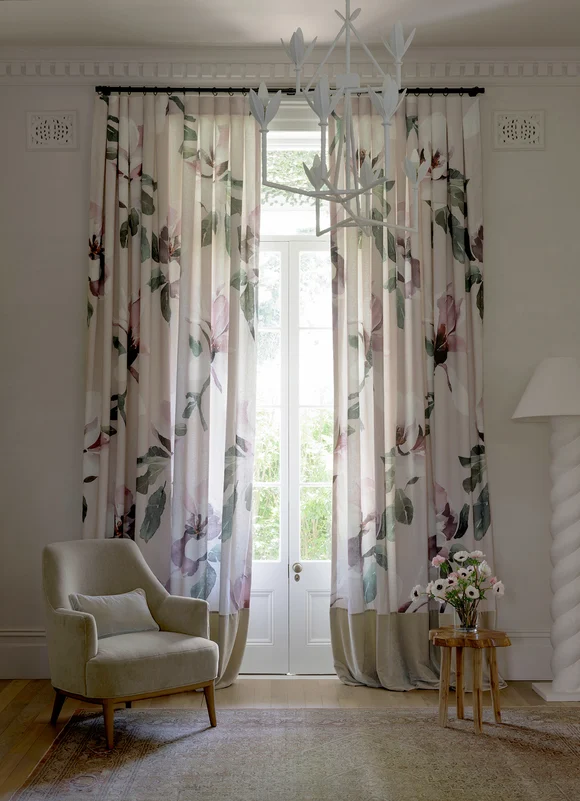
In a world of slim linear profiles and exposed bulbs, lampshades remain an effective way to soften a room and create ambiance

Journal
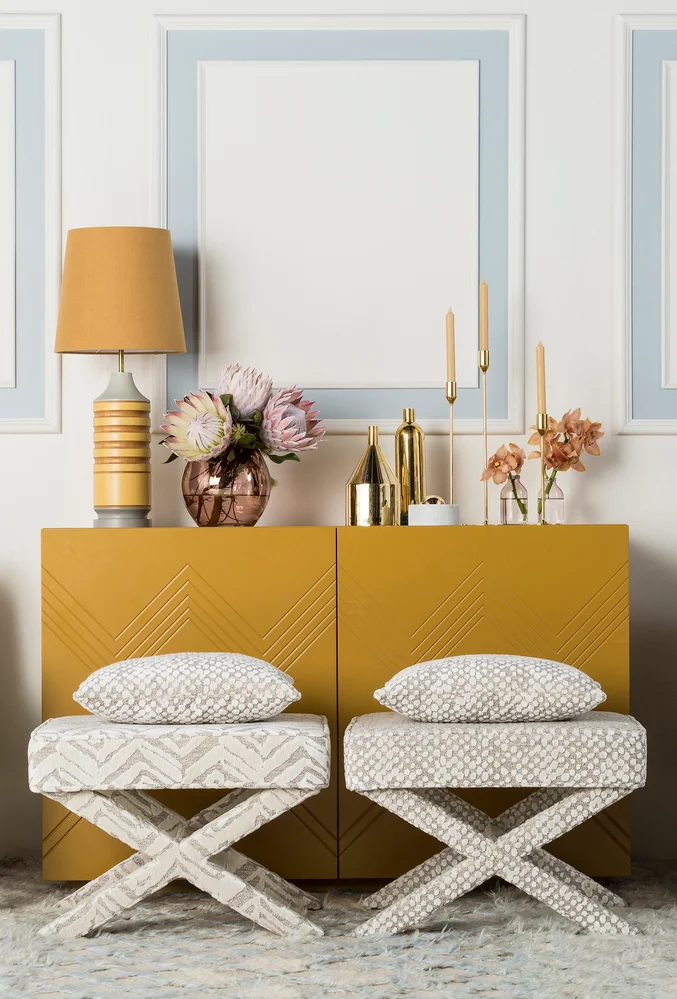
Laminated lampshade by Snelling Studio | Equator Collection by Mokum

Streched lampshade | La Palma Wallpaper colour Coral by Catherine Martin by Mokum at The Ryder Hotel
Accessories | Lampshades
Lampshades first appeared in the late 17th century when public lanterns – oil lamps with reflectors and several wicks – were installed in the centre of streets. Industrialisation in the 19th century led to gas lighting becoming the norm, however, there were many drawbacks and in 1879 Thomas Edison developed the incandescent electric lightbulb.
This invention paved the way for lamps and shades as we know them today; not only as a stylish decorative addition to an interior, but an effective means of defining and highlighting task areas in residential and commercial spaces.
Shapes & sizes
Shapes & sizes
A custom-made lampshade can be manufactured in an endless array of shapes and sizes to function as a hanging pendant, floor lamp, or table lamp, using a myriad of materials including fabric, parchment, vellum, glass, paper, or acrylic. Fabric lampshades are generally manufactured in one of two ways: laminated or stretched.
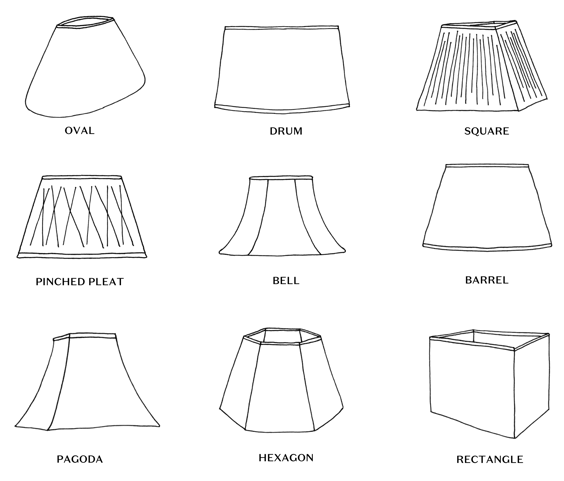
Below, we have collated a selection of the most common shapes:
LAMINATED LAMPSHADES
LAMINATED LAMPSHADES

Laminated lampshades | Images sourced from Pinterest
Laminated lampshades bring a more contemporary aesthetic to a space. To create a laminated shade, a firm fabric-covered backing is curved into an A-frame or drum shape; an opaque backing will diffuse the light while a transparent backing will allow greater light transmission. Coloured, metallic, and reflective interior laminates can create different light effects, from loud and colourful to warm and moody.
Fabrics with a natural component (cotton, linen, or silk) generally laminate better than 100% synthetic fabrics which do not absorb the PVC adhesive as well. If the application isn’t precise, glue marks may bleed through or air bubbles may become apparent where the fabric has not bonded properly. Additionally, it is essential that the fabric is fine enough to tuck neatly around the rings of the shade without bunching.
The texture of an open-weave linen sheer, such as Laconia Air by James Dunlop, will diffuse the light and enhance the shade when lit. Sparsely embroidered textiles are best avoided as the fabric around the embroidery will not adhere well, however, those which are entirely embroidery, such as Jungle Room by Catherine Martin by Mokum, adhere well and create a decorative statement piece within a space.




STRETCHED LAMPSHADES
STRETCHED LAMPSHADES

Stretched lampshades | Images sourced from Pinterest
Another common type of fabric lampshade is a stretched shade; these tend to be more traditional, often featuring scallops, crowns, waists, and pleats. To create a stretched shade, a metal frame is bent into the desired finished shape and welded together. Depending on the shape, the fabric is cut into panels and overlocked together, then ‘stretched’ over the frame until taut.
In more intricate shapes the frame may be bound by hand and the individual panels of fabric hand-stitched to the frame. Due to modern manufacturing techniques the binding and hand stitching has been replaced with specialised glue. Wetting the fabric and shrinking it onto the frame can also help keep the cover taut.
Stretched lampshades suit traditional silks, like James Dunlop’s Luxury, because of the softness and malleability they offer to the shape. Linens are best avoided as the fabric can look limp when atmospheric conditions change, while satins, cottons, and a wide variety of contemporary synthetic constructions, such as Luxe by James Dunlop, are all suitable alternatives.

It’s an age old saying that a window unfurnished is a window unfinished, but there are many decisions to be made when investing in custom-made curtains. Firstly, specifying a fabric which meets the client’s aesthetic, performance, and budget requirements, then selecting an appropriate heading sty...