
The French term ‘passementerie’ refers to the art of crafting elaborate ornamental trimmings or edging

Journal
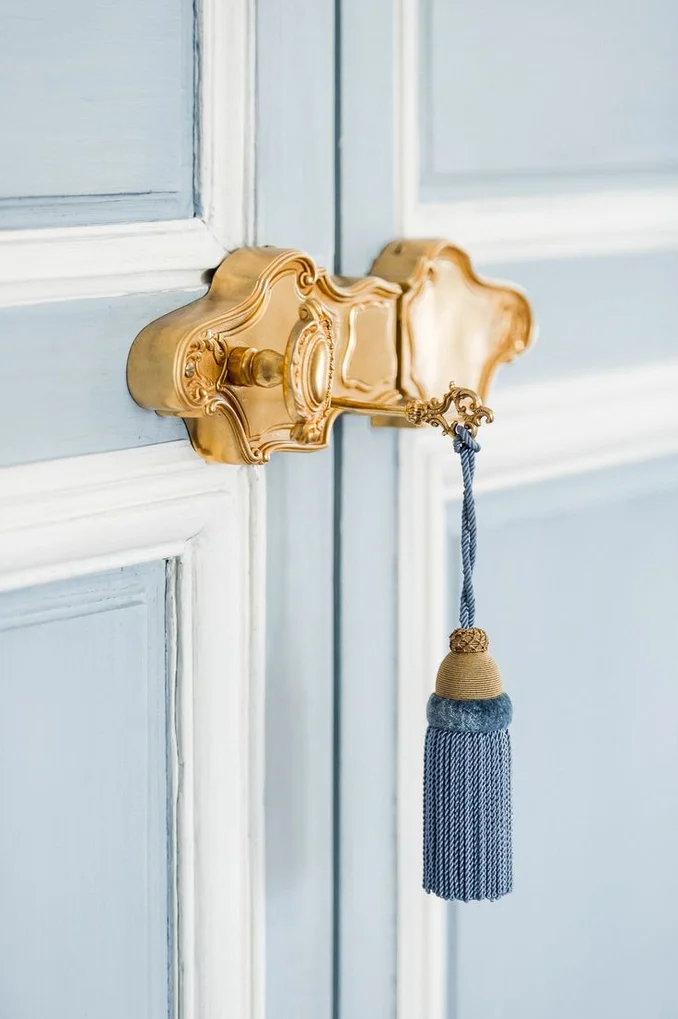
Image sourced from Pinterest
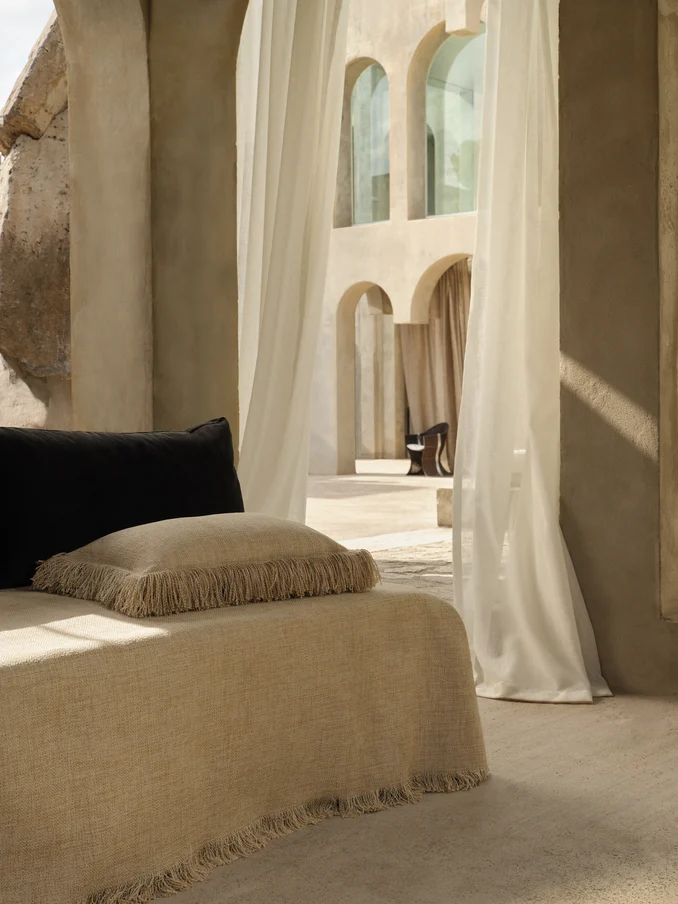
Vacation collection by Zinc Textile
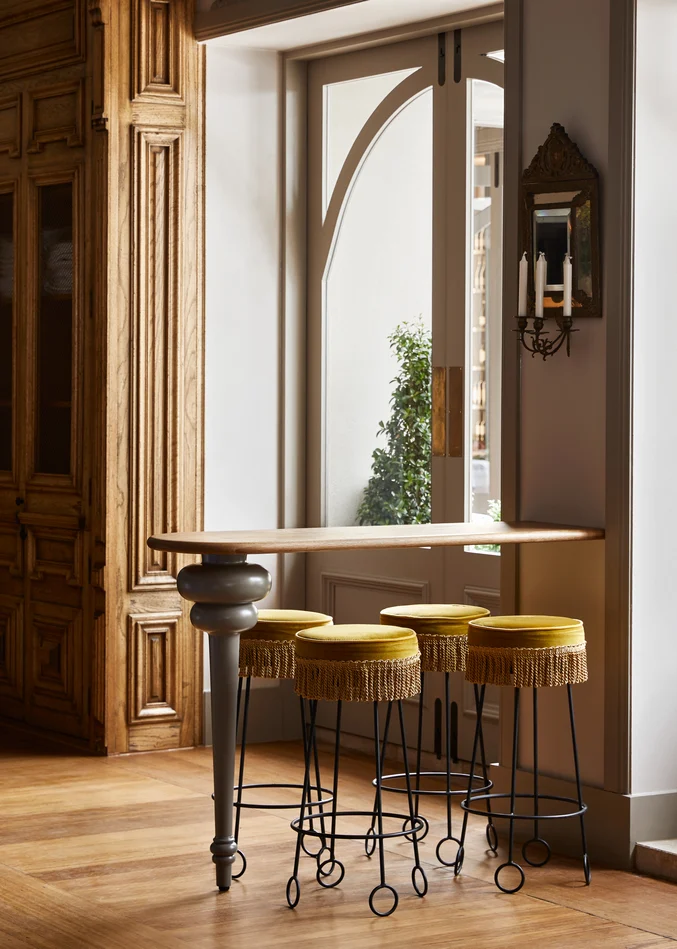
Entrecote, Melbourne | Interior by Brahman Perera, photograph by Lillie Thompson
Accessories | Passementerie
Passementerie adornments in both fashion and interior textiles date back to ancient Egyptian and Greek civilisations. By the 16th and 17th centuries these details were crafted from gold, silver, silk, or cotton threads and in the 19th were often colourful and embellished with beads, shells, wood, or crystals. There are now a myriad of passementerie available to interior designers, ranging from classic cords and braids to borders, fringing, tassels, tiebacks, ropes, rosettes, and bows – to name a few – manufactured using an endless list of compositions.
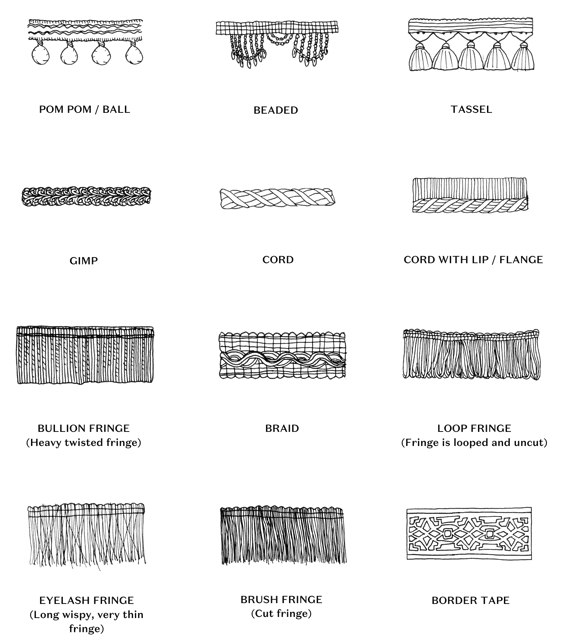
There are many profiles of passementerie, each with their own stylistic features and purpose. When used as an embellishment, trimmings can emphasise bold patterns, bring contrast through colour, or blend harmoniously into the space. Not only aiding in the elegant expression of a cohesive design scheme, passementerie also help to protect the edges of soft furnishings and conceal seams. In this article we illustrate the most popular styles and applications within interior spaces.
Styles of passementerie
Styles of passementerie
DRAPERY
DRAPERY
Passementerie can transform simple curtains into a bespoke feature of your interior. A wide trim could be used across the top, bottom, or bottom third, of your curtain as a decorative border detail, and when drapery is installed with tiebacks it will fall in a refined way.
Trims can be used along the leading edge of a curtain to add embellishment. Vulnerable to direct sunlight exposure, fixing a trim to the leading edge is an excellent way to protect your valuable curtains from UV degradation. Additionally, replacing a trim is far more cost-effective than replacing your entire curtain.
Learn more about protecting your interior from UV damage in our previous article.

Image sourced from Pinterest | Temperly London x Romo Collection
UPHOLSTERY
UPHOLSTERY
For a contemporary aesthetic, a bold graphic border or brushed fringe can be applied to a sofa, while a neutral linen fringe or sea-shell trim will evoke an organic look, and a bullion fringe will create a sense of formality.
Trims look fantastic when added to an ottoman or occasional chair. Textured or contrast trims may be applied to the circumference of the piece, or a tassel trim may be applied to the bottom edge to soften the look.
A headboard or throw can also be transformed with a trim embellishment; they are a brilliant way to add a luxurious aesthetic to what may be a plain or inexpensive base piece.

Interiors AIME Studios | Images sourced from Pinterest
ACCESSORIES
ACCESSORIES
Trims elevate the appearance of cushions, either by adding contrast in colour or tone, or an embellished texture. A trim may be stitched around the entire cushion, just down two sides, or down the middle face of the cushion as a feature. Additionally, tassels can be stitched to each corner for an opulent look.
Learn more about popular shapes and styles of cushions and how to curate them within your space in our previous articles.
Trims are also often used to adorn lampshades, running around the circumference of the top, bottom, or both, of the drum. Trims such as gimp tape are used to conceal the seams of stretched lampshades, while beaded tassels reflect the light beautifully.
Learn more about stretched and laminated lampshades in our previous article.

Interior by Material Creative | Image sourced from Pinterest
TIEBACKS
TIEBACKS
A curtain tieback is a functional and decorative window accessory used to hold curtains back from the window when open. From a simple rope or braid through to highly embellished materials with metal or glass beading and laser cut detailing, tiebacks can be constructed in various styles.
More elaborate tiebacks fall into the following categories:

Consisting of a single U-shaped strip of fabric held flat with interfacing, structured tiebacks are often referred to as ‘banana’ tiebacks because of their curved shape and contrast pipe detailing. A ring is placed at each end to loop around the curtain and over a hook fixed onto the window frame or wall.
A ruched tieback is made from a roll of interfacing covered with a gathered tube of fabric. A ring is placed at each end to loop around the curtain and over a hook that is fixed onto the window frame or wall.
Available in a huge range of colours and styles, the tassel tieback is one of the most common forms. A tassel tieback commonly consists of a single or pair of tassels connected to a rope with either one or two loops. These loops can be secured around the curtain as above, or the loops may be tied to each other in a loose knot. The length of rope is referred to as the ‘embrace’ and must be long enough to hold the curtain comfortably and securely. Too long of an embrace and the curtain may sag over the window and obscure the view, whilst too short of an embrace may cause the curtain to appear bunched-up when secured.
HOLDBACKS
HOLDBACKS

Holdbacks are hardware forms as opposed to soft furnishings. A U-shaped piece of metal, coloured to fit the scheme, is secured to the wall by one leg and the curtain is pulled over the other leg. Holdbacks allow for ease of use when required but are inconspicuous when unrequired and are often ideal beside sliding doors.
A rosette is a highly decorative holdback made from any material and in any shape or size – circular discs, seahorse, rose, or fleur-de-lis – and can be coloured to coordinate with the scheme.
Emerging in the early 20th century, the Bloomsbury Group of painters, writers, and thinkers cultivated a bohemian way of life and revolutionary style, in response to the reserved society of Edwardian England. Influenced by classical frescoes, Cubism, Post-Impressionism, and the Arts & Crafts move...
