
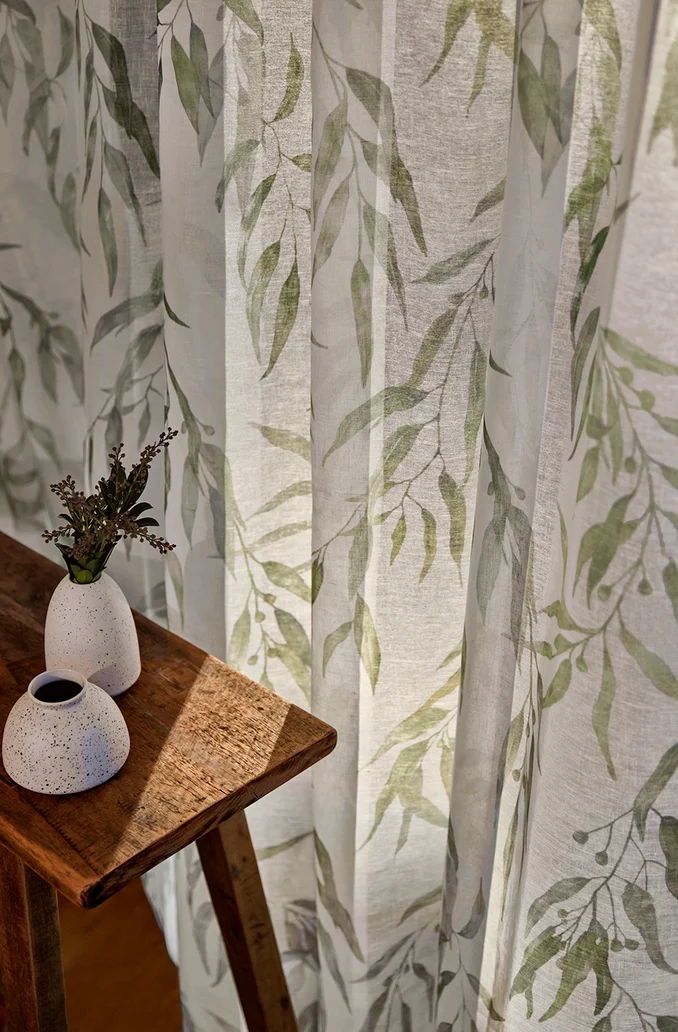

Protect your furnishings from damaging UV rays

Journal
How to apply ‘SPF’ to your interior
No matter where you live in the world, your home will be enduring some degree of damaging sunlight. Especially here in Australasia, where we favour expansive windows and a lifestyle that blends our indoor and outdoor spaces.
How does UV damage occur?
How does UV damage occur?
When the sun is shining it’s only natural for us to enjoy the warmth and let the light stream through our windows. However, harmful UV rays are still present even when there is no direct sunshine, slowly damaging our furniture, curtains, art, and flooring.
This damage occurs when ultraviolet light spurs a reaction between the water present in fabric and atmospheric oxygen to create hydrogen peroxide. This is a bleaching agent which breaks down the chemical bonds that give dyes their colour, therefore it’s not actually the fabric fading but the dye within the yarn.
As fabrics are commonly piece or yarn dyed they are more inclined to fade compared to other objects in the home that are more reflective of light. Additionally, as the chemical bonds break down within the yarn, the fabric can become brittle and weak making it more susceptible to breakage. The effects of UV damage aren’t immediate, it’s a gradual process increasing in impact over time, leaving your curtains, cushions, and upholstery fabric looking faded and worn.
Read more: How to look after your upholstery

Textile design & composition
Textile design & composition
Our environment and the indoor-outdoor lifestyle enjoyed in Australasian homes creates a technical criteria for product development, as the market demands practical and robust constructions. In response to this, our design studios develop upholsteries, draperies, and wallpapers capable of withstanding our unique environmental conditions.
We work closely with our mills to ensure our developed textiles are fit for purpose and we do not re-sell textiles straight from our suppliers. Our designers manipulate compositions and constructions to ensure our products are suited to our lifestyle, and we ensure stringent testing which, if not meeting our critical standards, will not be included in our range.
A textile’s composition has a direct impact on the way in which a finished textile will look, feel, and ultimately perform. Natural fibres such as cotton, linen, silk and wool, are absorbent, porous fibres and therefore sensitive to their surrounding environmental conditions, such as changing humidity or UV light levels.
When working with 100% natural fibres our designers are careful to use quality pre-production, dyeing, and finishing methods, or more often than not we favour a blended composition of both natural and synthetic fibres. Blended compositions allow for the luxury aesthetic and handle of natural fibre to be complimented with the added performance benefits of synthetic yarn types. Adding synthetic fibres such as polyester, nylon, or acrylic to a textile composition will almost always improve strength and stability results, and when used in conjunction with high quality dye, should achieve improved colourfastness to light results.
Read more: Textile fibres and their characteristics
Textile testing
Textile testing
We test all of our textiles externally in Melbourne at a highly reputable laboratory and will not release a product that doesn’t achieve satisfactory test results. The laboratory results are conservative and amongst the most stringent in the world, given Australia and New Zealand’s harsh environmental conditions. As such, many of our studio's textiles which would be acceptable in other markets will not go be released if they do not stand up to our testing criteria. Our local consumers demand a lot of textiles, so we are often complimented internationally for the robust and high performing nature of our products.
The hole in the ozone layer above Australia and New Zealand creates high levels of damaging ultra-violet light so our design teams pay particular attention to the colourfastness and light test results. Subsequently all other markets, such as the USA, receive products from James Dunlop Textiles that far exceed local expectations of UV resistance and durability under environmental conditions.
The colourfastness to light test examines how well the fabric will resist fading in ultraviolet light. The fabric is tested in controlled conditions under an artificial lamp, replicating the effects of natural light exposure. After 40hrs of continuous exposure, the fabric is removed and evaluated against both a piece of the original fabric as well as a standard set of 'blue scales' (8 scales which graduate from light (1) to dark (8)). The higher the rating, the better the resistance. A score of 1/8 is very poor, and 7/8 is exceptionally good. We provide the colourfastness to light test result for each fabric on their sample labels, comparing these scores will help in the selection of your fabric.
Read more: Unraveling textile testing | Colourfastness
Both the James Dunlop and Mokum design studios produce unique outdoor fabric ranges. Our unique lifestyle influences the look and feel of these ranges and great care and attention is made to ensure that our outdoor cloths look and feel like indoor fabrics. Increasingly, these ranges are used in place of indoor high performance alternatives as their inherent UV resistance and easy care attributes make them highly desirable for high use and commercial spaces where performance is key.
A great way to ensure longevity in your light filled home is to consider outdoor fabrics for your indoor spaces and give yourself the confidence that your fabrics will resist fading for years to come.
Read more: Outdoor fabrics that perform
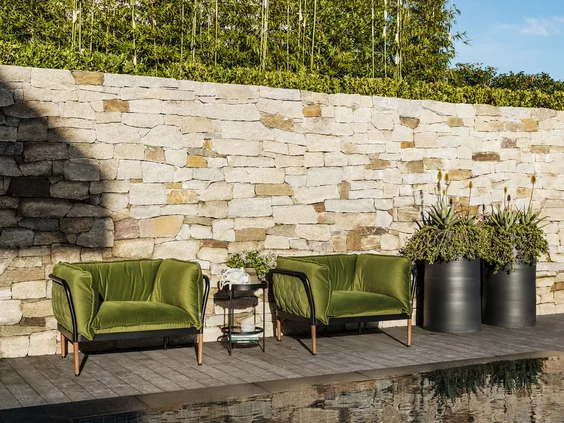
Protecting drapery from UV
Protecting drapery from UV
- Install a good quality lining behind your curtains, such as Nitefall, Solarline, or Galaxy which each achieve UV ratings of 5/8 blue scale. Not only does this provide insulation from heat and cold and block out all light for restful sleep, it will also help to protect your curtains from sun damage over time.
- Make sure there is plenty of room to stack back your curtains which limits direct contact of sunlight on to the front edges of your curtains and will extend their life.
- Occasionally swap curtains from one side of the track to the other to avoid having one edge constantly exposed to sunlight, helping to evenly expose the fabric to light over time and reduce the visibility of any colour change.
- Invest in sheers that will filter the sunlight entering your home, offering privacy as well as reducing the sun’s impact.
- Apply a UV window tint. These are usually invisible once installed and will drastically reduce the amount of UV light entering your space, saving not just your fabrics but your flooring, walls, and hard furniture as well.

Protecting upholstery from UV
Protecting upholstery from UV
- Arrange your furniture out of direct sunlight as much as possible.
- Rearrange furniture regularly to reduce constant and consistent exposure over time.
- Flip and rotate cushions regularly – this is not just good for light exposure but to ensure even wear on the fabric and inners over time.
- Install sheers to reduce direct light and add privacy and texture.
By taking some of these simple steps, you could extend the life of your soft furnishings and upholstery and keep them beautiful for years to come.
With any new development we start with research both analytical and creative, however for the purpose of this article we will focus on our creative process. Our chosen example to illustrate this development process is our hero design Majorelle, a woven jacquard textile which became the namesake...
