
Textile fibres, heading styles, and curtain tracks

Journal
How to choose curtain fabric
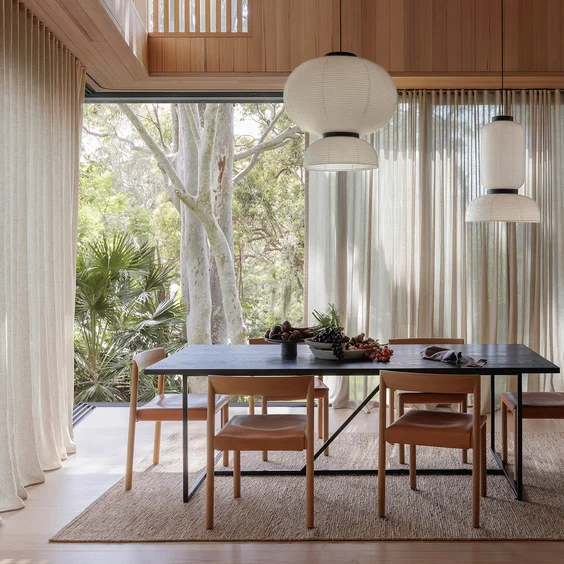
Soft window furnishings are essential in any interior, beyond their practical properties of energy saving through thermal insulation, noise reduction, privacy, and light control, they bring personality to any space.
With an enormous array of designs, colours, and textures available there are more opportunities than ever to enhance the look and feel of a room. But as each textile offers its own unique quirks, it’s important to select one that’s fit for purpose.
Your curtain fabric checklist
Your curtain fabric checklist
· Assess the types of windows you have in your home, noting their style and shape – do they suit curtains, blinds, or a mix of the two?
· How much privacy is needed in each room?
· Are there young children and/or pets?
· Do you need to reduce the glare of the sun?
· Do you need to protect your furniture from UV damage?
· Do you need to make your room appear bigger or smaller?
· Is there a lot of moisture (humidity) in the home?
· What is the style of the room? Formal, relaxed, coastal, maximalist, eclectic?
· Do you want to make a statement or keep the room tonal?
· How much fabric volume do you like?
· Decorative borders and/or trims?
· Should the hemline be above the floor, to the floor, or puddled on the floor?
· How will the curtain sit on the rod or tack? Running on the face or below?
· Sustainability of the textile?
· How much are you willing to invest?
Natural and synthetic textile fibres
Natural and synthetic textile fibres
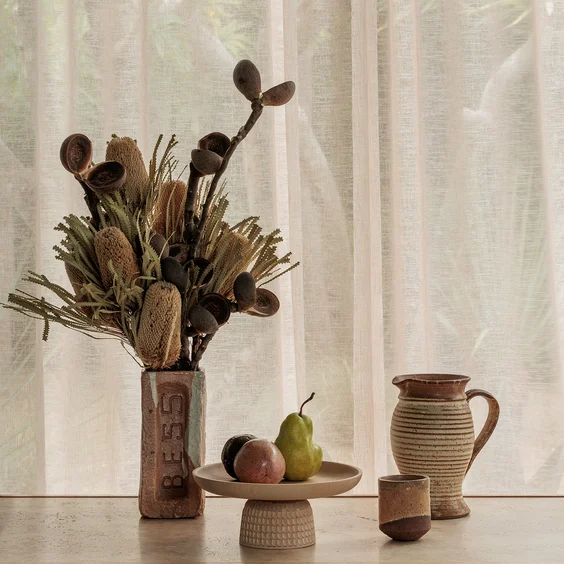
Textile fibres are natural or synthetic structures that can be spun into yarn and woven, knitted, or bonded into fabric. Because the inherent characteristics of fibres directly relate to the finished fabric’s performance and the maintenance required, understanding fibres and yarns will in turn help you to understand how to incorporate fabrics into your interior scheme and maximise their performance and longevity.
Learn more about these fibres in our article: Textile fibres and their characteristics
Curtain header styles
Curtain header styles
The heading style denotes how the fabric is sewn or pleated at the top of the curtain. This will impact the way the fabric drapes and its volume, therefore influencing the look and feel of the room – creating a traditional or more modern sensibility – as well as functional characteristics such as stack back – the amount of space a curtain will occupy when fully drawn open.
Whilst there are a vast range of heading styles available, the most popular are:
· Pencil pleat
· Pinch pleat (single, double, or triple)
· Inverted/Box pleat
· Wave/S-Fold
· Rod and Clip
· Eyelet
Learn more about these styles in our article: How to choose the right curtain header

Curtain tracks and rods
Curtain tracks and rods
As well as the fabric and the header you will need to select a track or rod on which to hang your curtains. Consider the style and the position of your curtain height in relation to the size, scale, and colour of the hardware for a balanced and cohesive look. The track or rod placement and way they function together will greatly enhance your window treatments.
Tracks are an economical and practical method for hanging sheers, curtains, and top treatments. The most common types are:
· Extendable track
· Face fix track
· Heavy duty track
· Multi fix track
· Top fix track
You can also use cable suspension systems, concealed track rods, metal or wooden rods, rings, or eyelet rods to hang your curtains.
Learn more about curtains and explore our extensive range of curtain fabrics.
Keeping upholstered furniture clean and looking great is a priority for homeowners and a technical issue for manufacturers and designers. Specifying an everyday fabric that looks beautiful, is soft to the touch, and will last across all applications is not easy, but there is an evolving textile s...
