
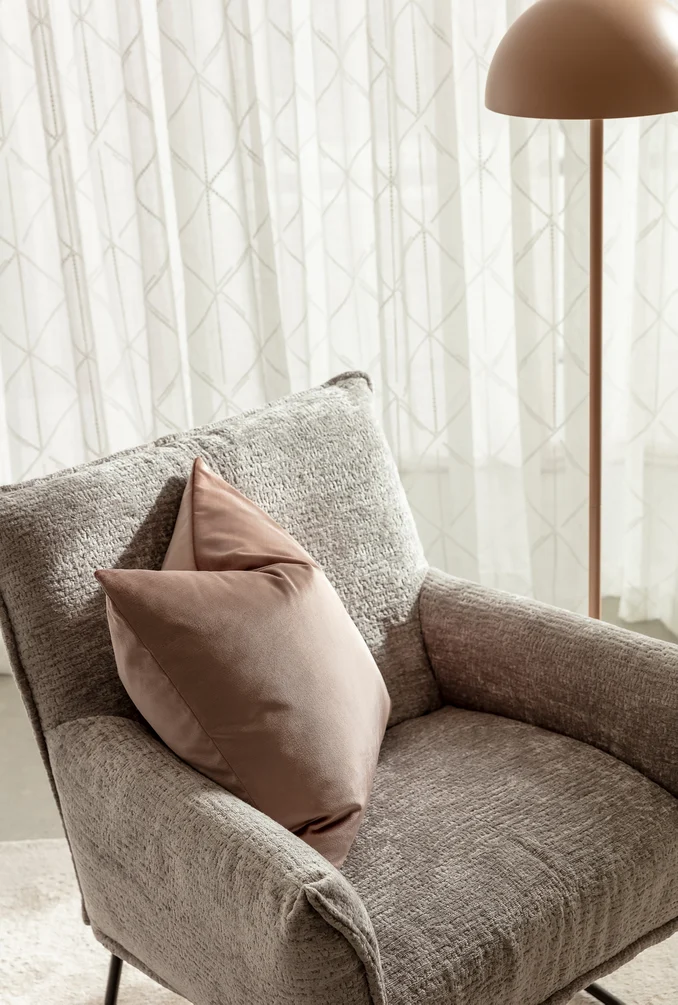

For many fabrics, ageing gracefully is part of their charm

Journal
Natural ageing of fabrics in upholstered furniture
The longevity of an item is relative to the environment in which it lives. When purchasing a new piece of furniture, or reviving an old one, it is important to consider the yarn, fabric, and construction in addition to the initial look and feel of the fabric to ensure it will align with your lifestyle.
Whilst the appearance of wear and tear on your furniture may be accelerated by choosing a textile that is not fit for purpose, for many fabrics ageing gracefully is part of their charm.

FibreGuard - Stain Resistant
Ask and You Shall Receive
Ask and You Shall Receive
Before committing to a purchase it pays to consider not only what you want, but what you need from an item. Perhaps you want a two-seater couch in a natural colour with a textured weave, that will look beautiful in front of the Mizu Garden curtains you hung earlier in the year. While what you need, is a couch that is fit for a couple who live on a modest budget in a sunny villa, with young grandchildren who visit most weekends.
This is the brief that the interior design salesperson requires to suggest fabrics which will reward you with performance and beauty, while also managing your expectations about how the textiles will age. Allow us to help them to help you, by sending you in prepared.
Fabrics are all different. They can be constructed from natural fibres such as silk, cotton, linen, and viscose, or man-made fibres such as polyesters and acrylics, or a blend of each. Fabrics made from natural fibres have their own unique personality in the way they age and look after some wear, which can contribute to a design aesthetic. Natural constructions will not be as durable in the long-term as a synthetic textiles, because they are more susceptible to pilling, fading, seam slippage and staining. Therefore, a greater level of care is required.
See our article on Characteristics of Textiles.
It is important to manage our expectations around perfection, to ensure we are not disappointed after buying a key piece of furniture for the home. Brand new fabrics are always going to look immaculate, but furniture serves a functional purpose and therefore endures quite a tough life. In our experience, when a fabric is unsuitable for the conditions it is subjected to, it will not perform as expected and issues can arise. Fabrics all age and wear differently and in some instances a poorly selected fabric will show signs of early aging; in the same way that stress and unhealthy lifestyle can age us prematurely.
What to look for in an upholstery fabric
What to look for in an upholstery fabric
- Resistance to fading
- Resistance to staining
- Strength of the fabric construction
- Resistance to pilling
- Resistance to seam slippage
What are perceived by some customers to be the failure of fabrics are often natural signs of the textile aging gracefully, quirks included. Just like a beautiful timber or metal finish, the way these materials change over time is all part of the life that you and your furnishings experience together.
There are steps you can take to ensure that your choices bring the longevity we all desire, we’ve covered some of them here in our article How to Increase the Lifespan of your Textiles.
Picture this: You purchased a brand-new couch this autumn. It has extra wide cushions on the seat. It’s sleek, it’s chic, it takes up one third of your lounge and most importantly, you can melt into it on a Friday evening after work. Fast forward to mid-spring. Sure, you passed all those cold w...
