
Understand filament, staple, and fancy yarns

Journal
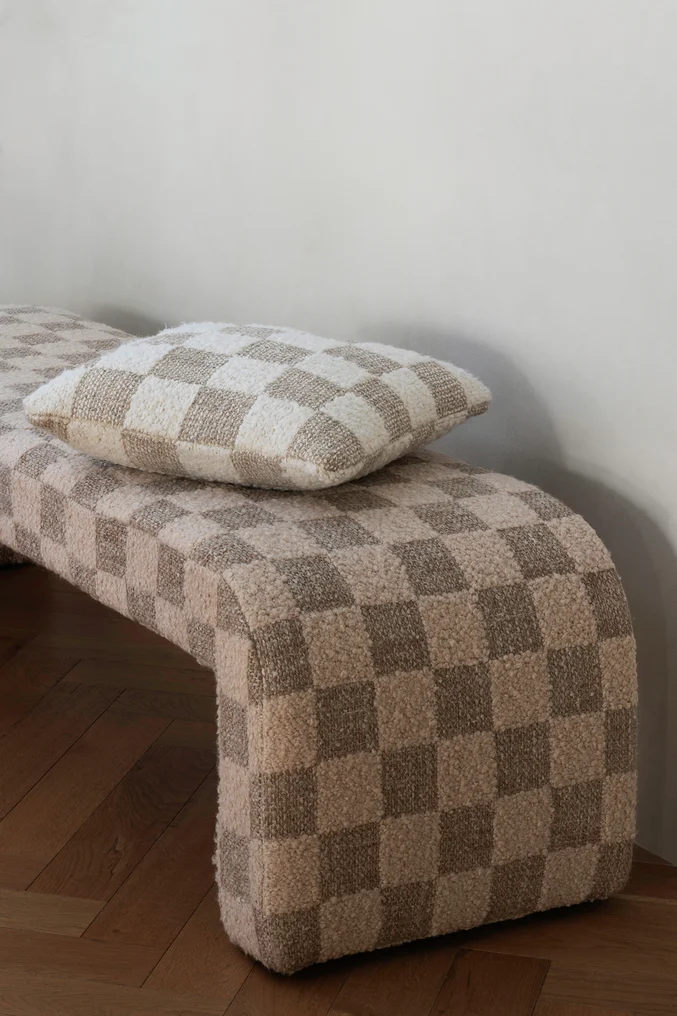
Heathered yarn | Quadro Boucle by Mokum

Nub yarn | Gentle by James Dunlop
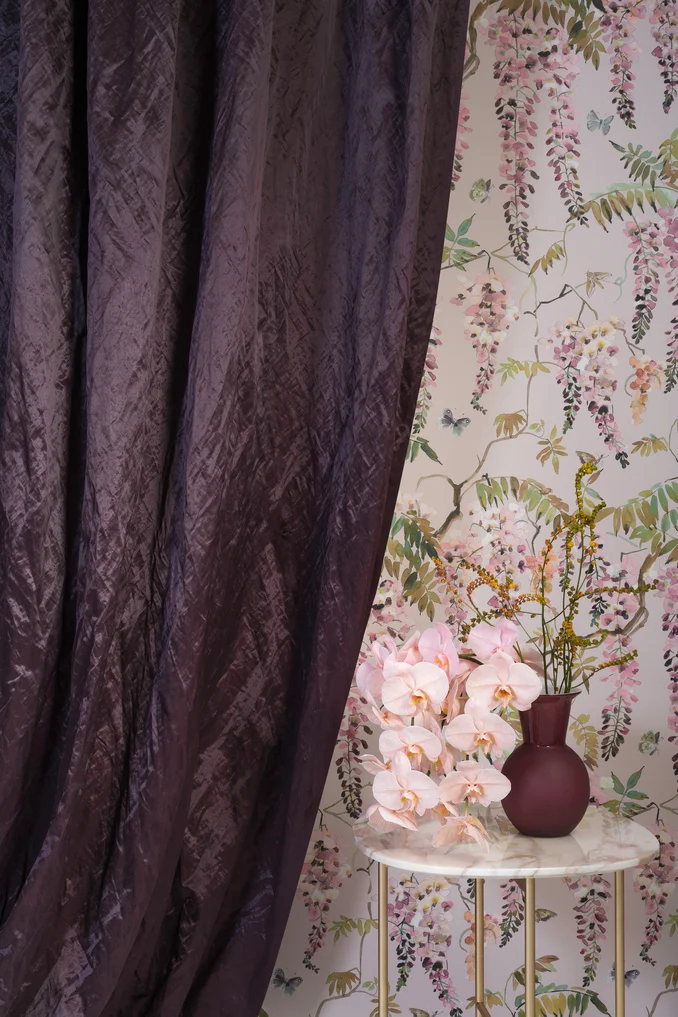
Metallic yarn | Couture by Mokum
Types of yarns and their characteristics
Yarn is a long, continuous length of fibres used in the production of textiles. Whilst filament and staple or spun are the main methods of yarn production, a variety of novelty or fancy yarns are commonly used to produce complex weaves.
Read on to discover the core differences between filament and staple or spun yarns and explore some of the many novelty yarns available.
Filament Yarns
Filament Yarns
A filament is a continuous fibre of infinite length. A filament yarn consists of twisted, plied, or grouped filament fibres. A monofilament yarn has just one, single fibre that is generally not twisted.
Whilst all synthetic fibres can be staple or filament, they generally begin as filament. In this form they can produce reeled/silk-like fabrics or be cut into staple fibres to produce fabrics that look and feel more like wool, cotton, or linen. Synthetic yarns are extruded from a spinnaker in liquid form, becoming a solid length (i.e. a filament fibre) upon contact with cold air. Although most natural fibres are staple, silk is a natural filament yarn. When the silkworm’s cocoon is submerged in hot water it releases the core fibres, which can then be spun into yarn.
The process of air texturizing plied filament yarns enables them to replicate the characteristics of spun yarns, such as the crimped texture of wool. Texturizing helps yarns to appear fuller and more natural.
Staple or Spun Yarns
Staple or Spun Yarns
If you unravel the ball of cotton from the plant or take the fleece from a sheep or an angora rabbit, the fibre is limited to the length at which it comes off the plant or the animals back. Hence, a staple length.
Spun yarn is made by twisting staple fibres (a textile fibre of finite length) together to make a single, cohesive thread. These strands of yarn are then twisted together in the opposite direction to make a thicker yarn; spun yarns may contain a single type of staple fibre or a blend of various types. The process of spinning (twisting fibres into yarn) can be dated back to the Upper Palaeolithic era and was one of the very first processes to be industrialised.
Blending synthetic fibres, for their strength, lustre, and fire-retardant qualities, with natural fibres, for their water absorbency and skin comforting qualities, is very common. Whilst blends of cotton-polyester and wool-acrylic are most common, blends of natural fibres such as alpaca, angora, and cashmere are also popular. Yarns and blends are selected for different textiles based on characteristics such as warmth, weight, durability, or handle.
Novelty or Fancy yarns
Novelty or Fancy yarns
Novelty or fancy yarns denote a wide variety of yarns made with unusual features, structures, or compositions. Both synthetic and natural fibres are used to produce novelty yarns.
As synthetic fibres are composed of plastics, they can be easily modified (e.g. shrunk or moulded) during production whereas natural fibres are generally allowed to retain their normal irregularities. However, natural fibres can also be enhanced by various finishing processes, such as mercerising cotton to emphasize the shine.
BOUCLÉ
BOUCLÉ
Bouclé yarn composes a length of loops of similar size which can range from tiny circlets to large curls. To make bouclé, at least two strands are combined with the tension on one strand being much looser than the other as it is being plied, the loose strand forms the loops and the other strand is the anchor. Bouclé can also refer to the fabric made from this type of yarn, especially fabric which maintains a ‘loopy’ appearance.


CHENILLE
CHENILLE
The soft, fuzzy surface of chenille yarns resemble pipe cleaners and can be created in several ways; like bouclé, the name chenille refers to both the yarn and the fabric. Generally, short lengths of yarn called the ‘pile’ and placed between two ‘core yarns’ and then twisted together. The edges of these piles then stand at right angles from the yarn’s core, giving chenille its lustrous appearance and soft handle, and causing it to look different in one direction compared to another as the fibres catch the light differently. Chenille yarn is commonly manufactured from cotton but it can be made from many fibres including polyester, rayon, and olefin fibres.


CREPE
CREPE
Crepe yarns are created by tightening the twist given to a yarn, resulting in a kinked or looped strand.
EYELASH
EYELASH
More commonly used in the apparel industry, eyelash yarn is made from a polyester fibre with a furry texture resembling eyelashes. These novelty yarns are made of a thin central ply surrounded by short ‘hairs’ which are evenly spaced between lengths of bare core yarn.
HEATHERED
HEATHERED
Heathered yarn is spun using pre-dyed fibres with flecks of alternative colours to produce a muted shade. These yarns are typically used to mix multiple tonal shades of a single colour.


MELANGE
MELANGE
Melange yarn creates a similar effect to space dyed yarns; however, melange yarns are produced by twisting more than two different fibres together. These can be either different fibre types or the same type in different colours.


METALLIC
METALLIC
Metallic yarns are often classified as fancy yarns and are created by adding a metallic fibre or yarn to the blend. Metallic fabrics can also be created via finishing processes, however, those containing genuine stainless-steel fibres will better resist degradation in strong ultraviolet conditions.


NUB
NUB
Popular in Indian textiles, a nub or knot is created by tightly twisting an effect yarn around the core base yarn at various intervals. Unlike the uniform bobbles found in boucle, a nub yarn is more like a daisy chain as the knots are followed gaps or various lengths. In the woollen industry, ‘neps’ may be thrown in during the spinning process and becoming trapped in the yarn to add colour and interest.


RIBBON
RIBBON
Ribbon is a type of yarn that resembles a ribbon. It can be made from synthetic or natural fibres, such as silk or cotton. Some ribbon yarns are flat, while others are tubular in construction.
SPACE DYED
SPACE DYED
Space dyed yarns are produced by dipping or jet spraying yarns in multiple colour combinations, resulting in a multi-coloured yarn. Unlike the tonal colours of heathered yarns, space dyed yarns can be either tonal or contrasting to create any effect. Package-injection yarns are also referred to as space dying, where dye loaded needles are repeatedly and regularly injected into yarns wound onto cones.


Our Mokum and James Dunlop Design Directors recently visited our European suppliers in Belgium and Italy, and attended Proposte, an annual textiles fair on the shores of Lake Como. In this article they share the slow evolution of textile trends led by the world’s most influential textile mills.
