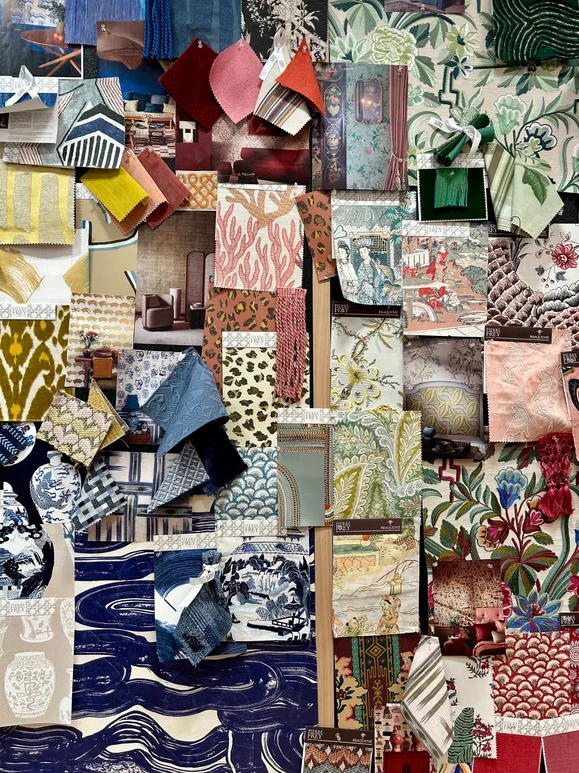
Discover dopamine minimalism, nostalgia, visual optimism, fantasy escapism, and colour confidence

Journal

La Palma Wallpaper in Palm Leaf

Bespoke by Catherine Martin by Mokum
Q&A | Stephanie Moffitt on colour
From researching interior design and colour trends to understanding the best-selling shades across substrates, Stephanie Moffitt, Mokum Design Director, discusses the process of designing a thematic textile collection and how to colour your space with a confident eye.
How does colour evoke a mood or atmosphere in a space?
How does colour evoke a mood or atmosphere in a space?
Colour is a key component when creating energy and personality within an interior space, but it all depends on your intention. If you want a soft, calming, minimalist space, the nuanced or naturalistic colours contribute as much as the architecture – and not just as textiles but on all surfaces.
I read a trend forecast recently called ‘dopamine minimalism’ and I really like that as a descriptor because colour can be animated and energizing. In commercial spaces we're seeing a lot of almost Soviet Bloc industrial-style minimalism, but with so much colour. So, I love the idea of dopamine minimalism where the design is really modern but colour brings the energy or personality to a space.
Nostalgia is a trend we’ve been talking about for years which colour plays a huge role in. We’ve seen chocolate brown replace grey and warmer, creamier tones appear, as well as the golds and burnt oranges which the industry has shifted towards. All of these influence your mood and for me, having grown up in the 70s, I feel nostalgia for these colours without the cringing response our parents feel towards them.
Over the past couple of years, we’ve spoken a lot about visual optimism and (even before the pandemic) using colour to create a more optimistic space. These ideas of joy have recently been fueled by colours like citrine, barbie pink, and apricot. And lastly, the healing power of green and Scandinavian principles of wellness and bringing the outdoors into your home through colour. So, without stating the obvious, I think it is a huge tool for influencing mood.

Moonlight Memphis by Catherine Martin by Mokum development
How does Mokum use colour unexpectedly?
How does Mokum use colour unexpectedly?
Our sense of colour and design is what actually makes us unique, so allowing our location and sensibility of our light, the way we live, and our inherent modernism to impact our colour choices and differentiate Mokum in international markets is a really important business tool.
I think a lot of interior designers use colour, or equally the lack of colour, to define their brand and create visibility for themselves; we also see being braver with colour as a way to differentiate ourselves in the local market. Going forward, our colourlines will be braver and more colourful. Ensuring Mokum offers you the same level (or higher) of decorative colour as international editors, but with the added value of being locally stocked.
When designing a pattern, how do you decide which colours are harmonious?
When designing a pattern, how do you decide which colours are harmonious?
We often start with the pattern but we’re mindful of connecting to the colours in our collection or past product range, to ensure our brand evolves each year. It’s a number of different things including linking to your base product and responding to trends and international colour forecasts that you think suit your brand, because you can't do everything.
As you're working on the construction, sometimes the colours you want to develop within a design do not work in that substrate, either because of yarn unavailability or the yarn just doesn't take that colour well. There are many factors that drive your colour palette forward, plains are a lot easier but in patterns you've got to have that balance right.
How do you balance the patterns and textures within a collection?
How do you balance the patterns and textures within a collection?
We imagine the room and the purpose of the product – whether it’s a cushion, upholstery, or drapery fabric – then we think about the balance within a space and the story we want to tell with the range. For example, if our collection is built around ideas of colour confidence we have to include a range of stronger colours.
It's a combination of making sure that we've got the volume products – the neutrals – and the decorative interest, then moving the palette forward with what’s happening in trend while balancing the large-, mid-, and small-scale patterns across our offering.

Sofa in Grande Boucle, cushions in Jungle Room and Bespoke, all by Catherine Martin by Mokum
What advice would you give to people who want to use colour and pattern but aren’t sure how to?
What advice would you give to people who want to use colour and pattern but aren’t sure how to?
Travel! Travel is so powerful and there is so much interesting design happening in hospitality. When I travel, I always try to visit the latest hotels and public spaces because the interior environment might be something you’ve considered and now you get to experience what it's actually like. Or if you stay somewhere that really resonates with you and you want to recreate that in your own home, you can interpret parts of the design in your own way.
Which colours, textures, and patterns do you see coming in interiors?
Which colours, textures, and patterns do you see coming in interiors?
Clean peach and apricot were prevalent colours at Milan Design Week. Citrine is a colour I had to fight to have in the range and when we went to Milan, it was everywhere. This colour is for the brave, but it's also important to differentiate us within the marketplace. We’re seeing metallic blues, Scandinavian blues, and bright cobalt; and at Dimore Studio there were a lot of deep jewel tones, like really dark plum, dark garnet red, and purple as well.
Terracotta is still so important. The other day I wrote a quote down which talks about terracotta embodying the ancestral connection to earth and craft, which I think explains why people connect with it – because it's very grounding and mixes so well with neutrals.
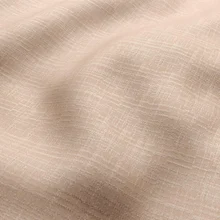



Boucle is becoming larger and more distressed with a really high pile, and while the practicality is slightly reduced, it enhances the feeling of cocooning which I think is why it's been so popular.
Even in our hot Australian climate, velvet is thriving. I think it's now a classic product in the interiors space and you can mix it with more naturalistic products to suit how we live, and interestingly, the neutrals aren't the best sellers when it comes to velvet, the colours are. For example, Bespoke is Mokum’s best-selling plain and I think that’s because it takes colour so well and the strong surface interest hides a multitude of sins – it’s exciting to see that colour actually can create revenue.


When it comes to patterns, there are so many different directions. We're seeing a lot of historical patterns being redesigned in contemporary forms. Our latest Catherine Martin range looks to 1930s and 40s Los Angeles to present escapism as a ‘fantasy tropical island’ – it's a little bit more nostalgic and decadent, we’re taking our Elvis theme out into the night to be kind of dirty and dark.
The other big trend for the year ahead is creative confidence. Coming out of the pandemic, my first trip away was to New York and although I already had a collection idea around abstract and painterly prints, both the Met and MONA had abstract impressionist exhibitions showing and I came away going ‘that’s it.’ It’s about coming out of the pandemic with creativity and the confidence to say that it’s our time now as a design community to use colour, design, and pattern to influence the way people feel at home. The collection is brave and artistic but sits on a base of very highly textured plains which mix and amplify the range.
Our International Brands Manager, Sarah Fox, attended Deco Off 2024 this January. Here, she shares insights into the colour, design, and construction trends that caught her attention in the showrooms and on the streets of Paris.