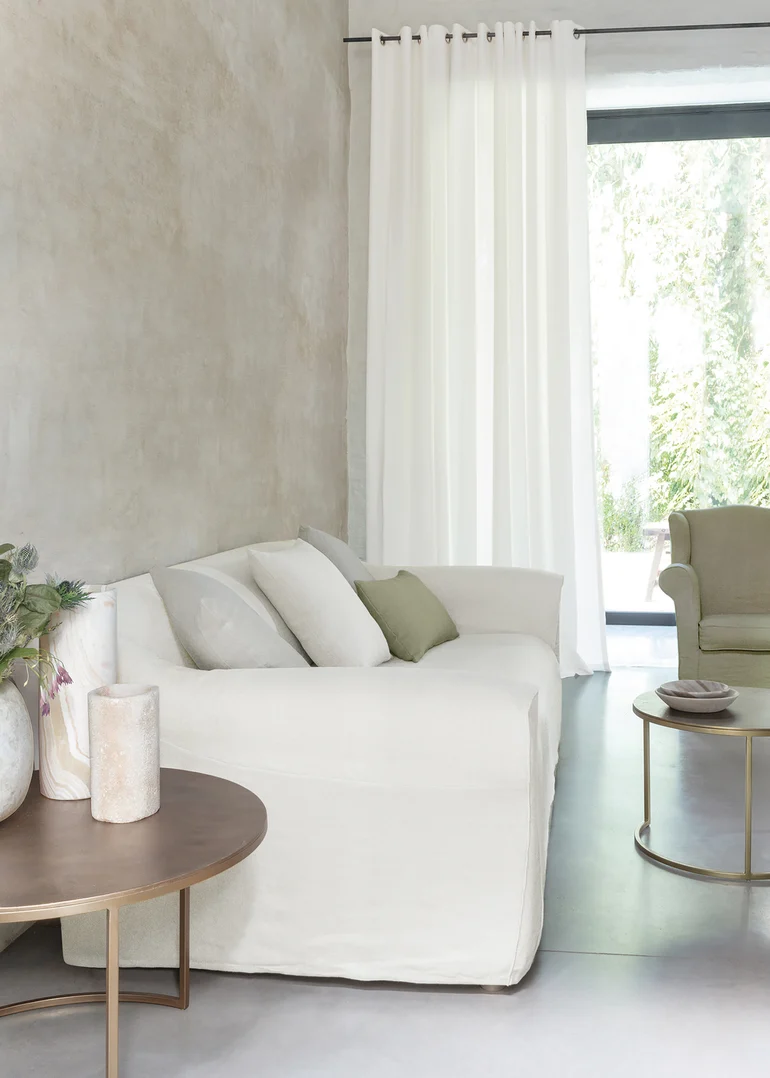
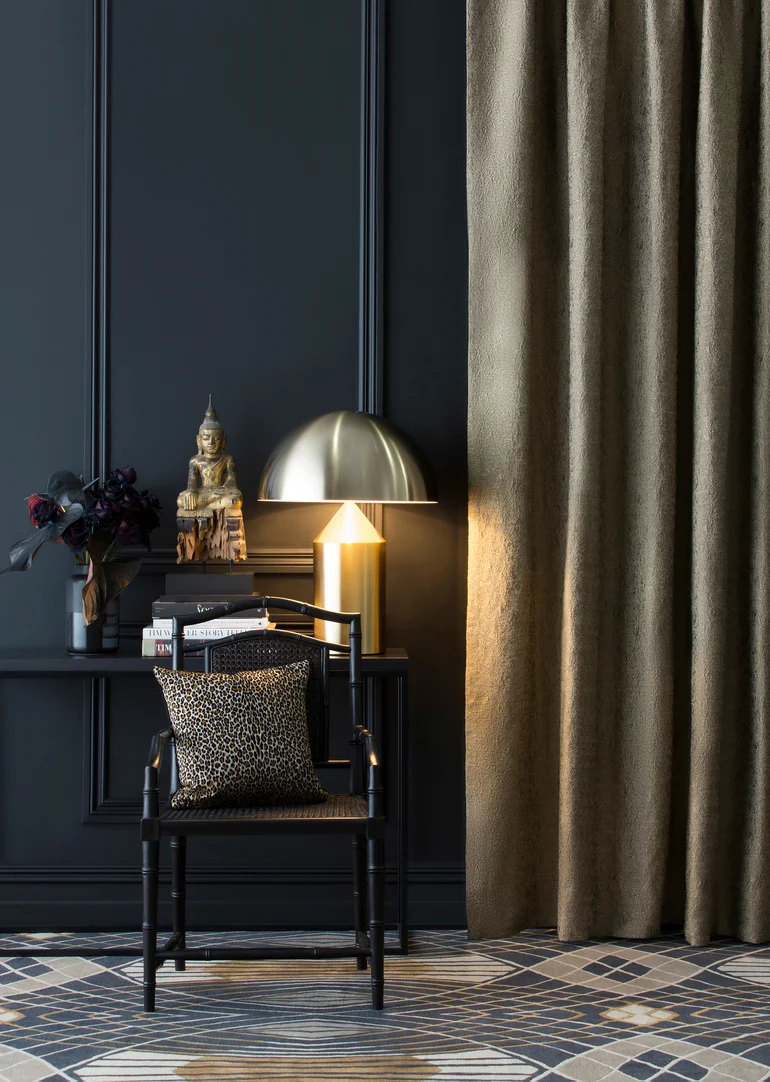
''Curtains have the ability to transform a room. They soften the hard architectural edges of a space, provide warmth, privacy and light filtration for ultimate comfort and aesthetics. It’s an age old saying that a window unfurnished is a window unfinished.''
Curtains

At James Dunlop Textiles, we offer contemporary and traditional wholesale curtain fabric for light, warmth, and privacy within your home, office, or commercial space.
Curtain fabric can transform a room by softening the hard architectural edges of a space and providing warmth, privacy, and light filtration for ultimate comfort and aesthetics. It’s an age old saying that a window unfurnished is a window unfinished, however, there are a lot of decisions to be made when designing custom made curtains. The first task, choosing the appropriate fabric, should be based on aesthetic, performance, and budget requirements.
Whichever material and design style you choose, curtains will add the finishing touch to a cohesive space by bringing together your décor and additional furnishings.
Curtain Considerations
Window Size for Curtains
Not all windows are the same and while some windows may suit floor to ceiling drapery, others may benefit from a blind. Whatever the case, you need to consider the window style and the aesthetic you wish to create. Learn more about measuring for curtains here.
Curtain Style
Formal or casual? The interior style of your home will help to guide your decision. A traditional home with high ceilings and period features may suit heavy velvet drapery puddled on the floor, while a more contemporary modern home might suit a minimal style that is less fussy. The curtain header you select (of which there are a range of options) will also achieve a certain look. Take your time to review the different header options and ensure you select a header which suits your desired aesthetic. Generally, by maintaining the header style throughout each space you will achieve a cohesive look. Learn more about choosing the right curtain header here.
Curtain Function
What benefits can a curtain provide? Is it a bedroom that requires blackout for a peaceful sleep? Is it an office where the sunlight needs to be managed? Or is it a living room that you like to keep cosy at night? Each room in your home will have different needs. Understand how children and pets interact with the house; these factors need to be considered as durability and easy-care attributes are of the utmost importance. Read more about choosing curtains for your home here.
Curtain Position
Depending on where you live the damaging rays of the sun can lead to the deterioration of your drapery and interior furnishings. Selecting a fabric with a high UV protection rating will help to reduce this issue, although curtain edges are especially vulnerable to sun damaged. To remedy this always push back (stack) your curtains so they sit off the glass, or, add a sheer curtain fabric to filter the rays at the same time. See our blog on UV and how it affects our interior here.
Curtain Lining
Lined curtains are vital to creating a thermal insulation barrier at the window; when professionally fitted they can reduce heat loss by 40-60%. With a variety of quality lining products including block out, triple weave, silicone, and interlining there is something for every situation and behind every curtain fabric. Read more about drapery lining fabric here or for blog posts related to lining visit our articles:
When A Lining Is Not A Lining, But So Much More…..
How to - Choose the Right Lining
Curtain Fabric Types
We offer an array of options from linen drapery fabric, retro curtain fabric, and sumptuous velvet curtain fabric to versatile outdoor curtain fabric and even bright colours like yellow curtain fabric to suit every taste and style. Whether you desire a refined, elegant ambiance or a cozy, casual feel, our diverse selection of curtain fabrics allows you to effortlessly transform your living spaces. Embrace the charm of sheer fabrics to gently diffuse light or opt for blackout options that provide the ultimate in privacy and light control.
Curtain Header Styles
The curtain header refers to the way in which the fabric is sewn or pleated at the top of the curtain. This directly impacts the way the material drapes or hangs, as well functional characteristics such as stack-back (the amount of space a curtain will occupy when drawn fully open). There are plenty of curtain header styles – from traditional to contemporary – each providing functional benefits and helping to achieve the overall look of a space. Learn more about curtain header styles here.
Wave Header or S Fold
An S Fold or Wave curtain heading provides a simplistic look which is suited to most solid, patterned and sheer fabrics. Through the use of a structured buckram tape, adhered to the back of the header, the material is evenly distributed in a symmetrical Wave formation. The use of wide width fabrics is a great way to achieve a continuous line across a window with no joins or seams, leading to production efficiencies and minimal stitching.
Flat Pleat
A simple curtain heading with slight fullness that achieves a refined, contemporary look. This style is ideal for solid and sheer designs, or patterned fabrics as there are no pleats to disrupt the pattern repeat. A flat pleat is also a perfect header option for sheers behind a lined curtain on a double track as it sits neatly underneath with little stack-back. Given the casual look of this header style it works perfectly with high quality linens for relaxed elegance.
Pinch Pleat
A pinch pleat offers a classic look. Pleats are achieved through folded creases in the stiff buckram tape, hooks are then inserted allowing the curtain to be hung on a track or rod. There are three varieties of pinch pleat headers characterised by the number of folds/creases at the top (single, double, or triple) as well as the fullness, stack-back, and overall look.
Pencil Pleat
Represented by its small pencil sized pleats, the pencil pleat is a gathered header allowing you to gather the fabric to your desired fullness. The fullness is dependent on the amount you gather with the pull cords and due to the fullness that can be achieved it's advised to avoid heavy or bulky fabrics as these can disrupt the even distribution of the gathering.
Box Pleat
The box pleat is a classic curtain heading style that creates a tailored, elegant look. Deeply inverted pleats run across the top of the drape to create a flat heading style that is designed to sit neatly under a curtain rod or on a track. Creating uniformed folds, a box pleat is suited to most fabrics however thought must be taken when using highly patterned designs, especially geometrics, as the pleating can disrupt the pattern match. A great heading style when using a standard width fabric as joins can be hidden into the fold of the pleat therefore minimising the appearance of unsightly seams.