
"A great hotel offers excellent service, comfort and memorable experiences and that’s why we strive to direct conceptual, experiential design driven solutions."

Journal
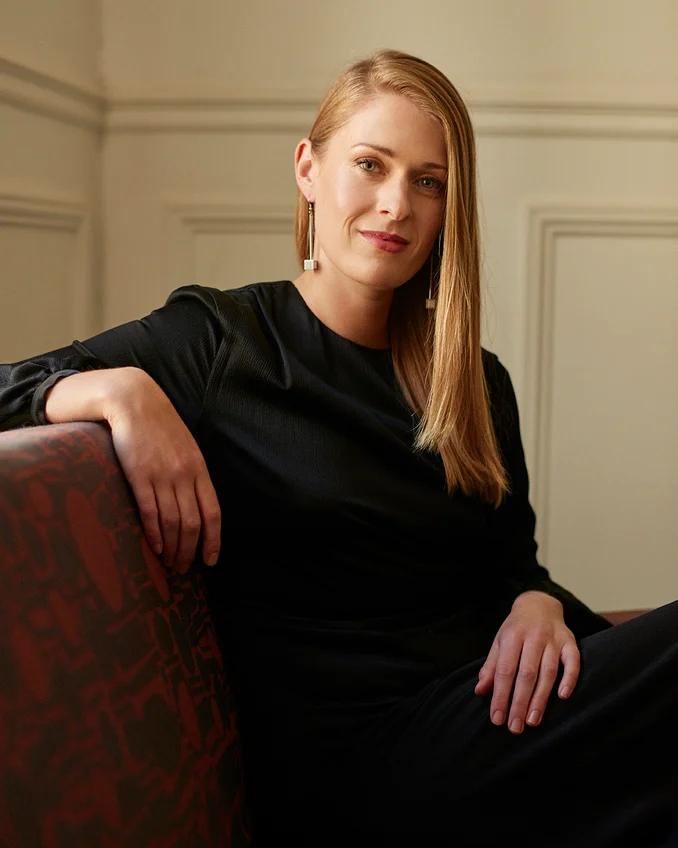
Reimagining hotels | Ngahuia Damerell, Accor
Ngahuia Damerell is the Senior Project Manager of Luxury & Premium Brands at the Accor Group. After graduating from Massey University, New Zealand, Ngahuia began her career as a textile designer with Textilia and Mokum here in Australasia, before taking up positions in London, New York, and finally, Paris.
With an impressive resume and a unique understanding of both the Antipodean perspective and a wider world view, she has provided us with her insights into the future of hotel design.
Accommodation facilities come in many forms; what is the role of the hotel in our modern era?
Accommodation facilities come in many forms; what is the role of the hotel in our modern era?
At Accor, we see the hotel's role evolving to become a community hub, a place where people can gather and engage. According to the United Nations, by 2050, 68 percent of the world's population will be living in cities. We believe that cities will evolve to the point where everything significant is within a 15–20-minute walk or bike ride from home and that our hotels will be able to accommodate not only tourists, but everyone from local consumers, artisans, retailers to working professionals.
The days of hotels obliging only tourists or business travellers are long gone. Take, for example, our latest My Movenpick Market lobby concept created in collaboration with 3 stories in London, that reimagines the lobby experience. Everything before the guest lift & check-in revolves around a premium food & beverage offer, blending various brands, products and services. The MMM lobby challenges convention by creating transitional, overlapping spaces in sustainable natural materials and local furnishings connected by an architectural ribbon structure. This format means that staff aren't stuck behind a desk; they move freely, mingling with visitors, locals & tourists alike. It is a welcoming, engaging setting that offers tourists an authentic glimpse of local culture from the moment they enter the vibrant local atmosphere. Essentially, we hope that the role of our hotels will extend hospitality to our guests and communities and be part of their daily lives.
In response to the pandemic, it seems that many people are seeking flexibility above all else. How is hotel design adapting to provide this flexibility in the spaces and services offered?
In response to the pandemic, it seems that many people are seeking flexibility above all else. How is hotel design adapting to provide this flexibility in the spaces and services offered?
Exactly, and as I mentioned, one example of rethinking space to gain flexibility is optimising lobby spaces to engage the wider community. The pandemic has expedited the evolution of hotel design in terms of how space is occupied and organised to benefit a broader range of guests and pivot as society advances.
Another notable design lead response comes as a result of societies current acceptance to working from home or anywhere. Flexible co-working spaces in hotels provide an alternative solution with high quality service standards. There are standard hot desk options along with the conveniences of hotel services as-well-as the possibility to book a hotel room that has been converted into a stylish and comfortable office environment for a lower daily rate. It makes sense not only for visitor comfort, but also for hotel revenue and occupancy, both of which could benefit after a difficult period. It's referred to as 'Workspitality®.'
Additionally, work flexibility blurs the boundaries between business and leisure travel; post pandemic we expect that more and more people will be traveling for ‘BLeisure’. This enhanced work travel, often includes the family, who join in to enjoy hotel facilities and weekends together, and again, this necessitates architecturally smart rooms that can suit various functions. We have had to rethink what we're doing and how we're doing it and we're now building hotel environments that are more adjustable and versatile to fulfil our guests' different needs to connect or disconnect as desired. In guest rooms, furniture is easily transportable and transformable, allowing the room to be rearranged to purpose fit daily needs: to workout, rest, dine, entertain, wash and work all in the same space.
Accor is opening 300 new hotels in 2022. How do you adapt your design process to such a range of locations and clientele?
Accor is opening 300 new hotels in 2022. How do you adapt your design process to such a range of locations and clientele?
We don’t adapt our design process as such, rather, we carefully select the designer best suited for the brand and location. This process starts with a preselection by us, of approved architects and designers whose data and skill sets are specified and added in our global Design and Technical Services library database, that is accessible to our teams around the world. It’s not only established designers, but we also love to give new talent exposure too.
Selecting to work with design teams who have a pre-existing relationship, understanding of the location, or will deep dive and analyse from a fresh outside perspective, is, I believe, most vital. For each brand, we provide global design direction, then designers do great things adapting to the project. The high calibre designers we choose have the know-how and capacity to push limits and authentically portray a location or juxtapose it and we put our trust in them.
Many hotels are constructed within historic buildings, such as The OWO, London. How does the history of a space influence your creative direction?
Many hotels are constructed within historic buildings, such as The OWO, London. How does the history of a space influence your creative direction?
The history of a space helps direct a genuine narrative and emotional connection through design. When we have the privilege of developing a historic building, particular attention is paid to the architect and/or designer that is appointed. EPR architects for example, who we engaged for OWO are experts in historic landmarks, they know what to look out for in such a monumental grade II listed building and therefore approach the architecture and design with respect & sensitivity.
When speaking to Hospitality Design you mentioned the potential for interiors to pioneer inclusivity and empathy. How can this be achieved in shared spaces such as hotels?
When speaking to Hospitality Design you mentioned the potential for interiors to pioneer inclusivity and empathy. How can this be achieved in shared spaces such as hotels?
Again, I think this comes down to connecting community and providing welcoming environments from the moment of entry. I’ve talked about the inclusive neighbourhood lobby concept that supports local artisans and independent retail, additionally, we recently launched a concept called the Smart Room, which through intelligent design, makes accessible rooms some of the most desirable, because of the comfort & style provided through design. Our brands offer Smart Rooms, the concept is that it is a larger space to accommodate people with disabilities, families or, just require more space. Everything is carefully considered using technology to aid with voice control facilitating the opening of curtains, mechanical adjustable beds, illuminated switches for the visually impaired, adjustable, movable walls to broaden or separate space as examples. The details such as handrails no longer look clinical, they are designed to match the brand aesthetic, cleverly adding design character at the same time as functionality, convenient and inclusive for everyone from a young family to someone in a wheelchair travelling with a support aid.

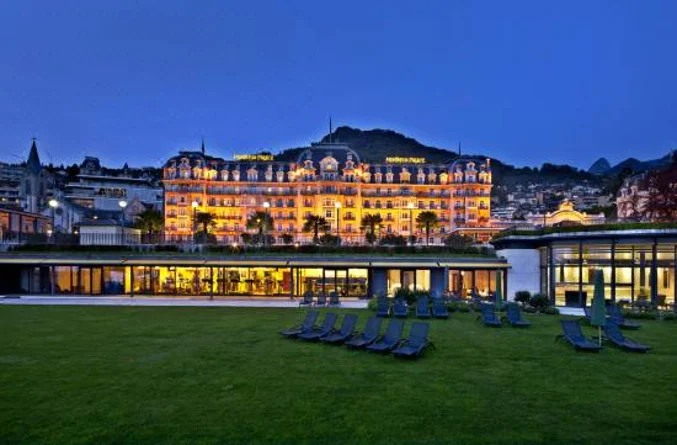
Fairmont Le Montreux Palace
What makes a great hotel? Can you share some of your personal favourites?
What makes a great hotel? Can you share some of your personal favourites?
A great hotel offers excellent service, comfort and memorable experiences and that’s why we strive to direct conceptual, experiential design driven solutions. We constantly aim to energise and evolve our brands beyond aesthetics, working hand in hand with the brand managers, designing in service offers and rituals for each brand that the staff can carry out, such as the customised, emotional wellbeing service offered by the butler at Raffles or the SO/Guru who is recruited for their style and knowledge of the best local neighbourhood spots. We think a guest will remember the experience and way they were made to feel more than anything else.
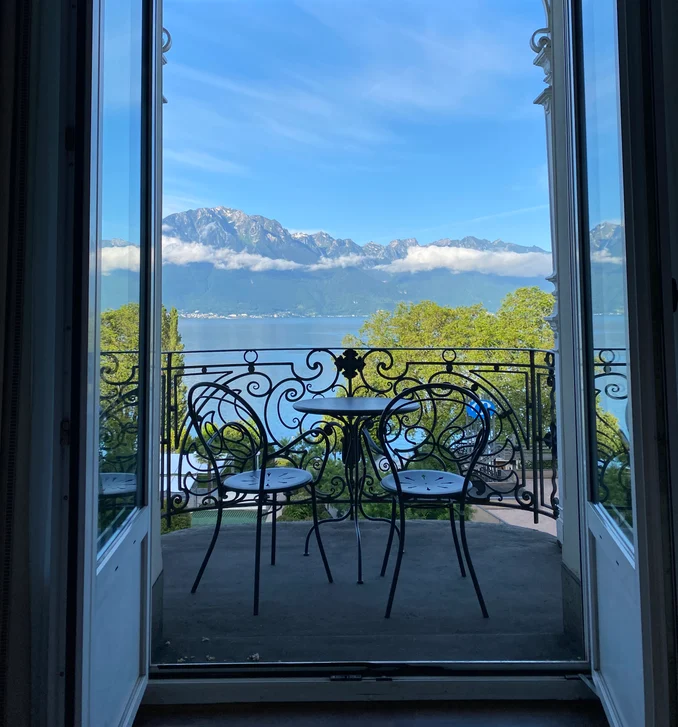
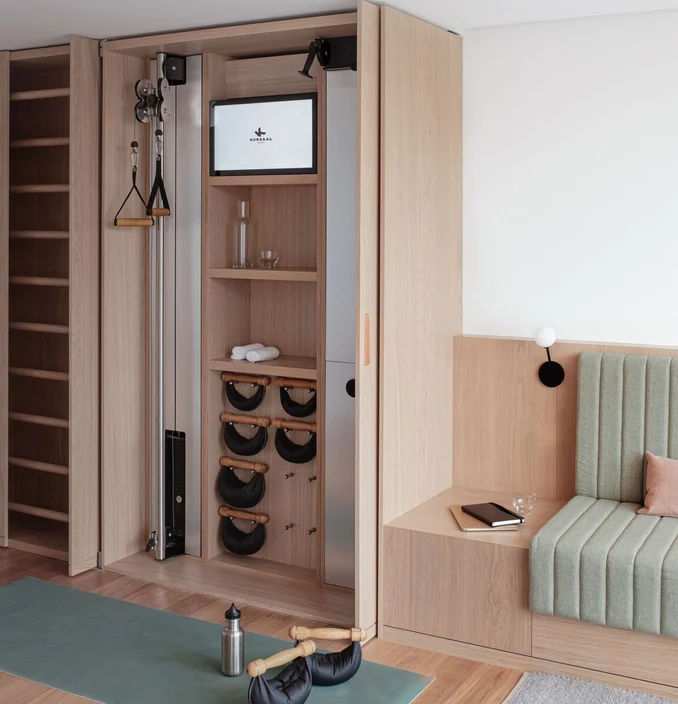
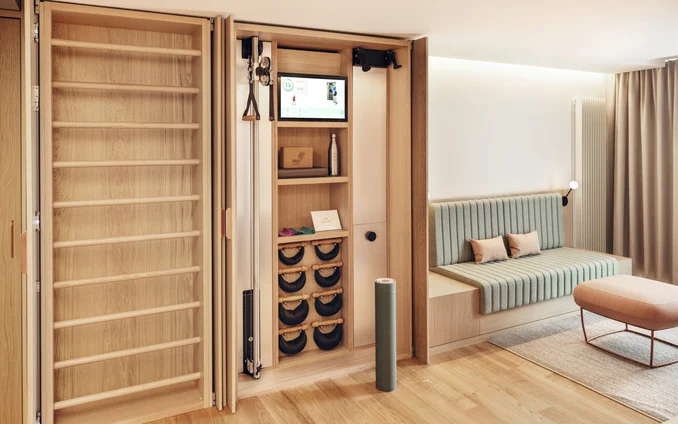
In terms of my favourite hotels, that’s tricky! However, most recently I had the chance to go to Switzerland and experience the Fairmont Le Montreux Palace, which epitomises great service. The staff are so attentive and kind, the rooms are generous with a stunning view out to the lake and the spa & wellness area with indoor and outdoor pool set next to the lake is one of the loveliest I’ve been to. Another favourite in Switzerland was Swissôtel Kursaal Bern. It is the latest in the brand family to implement the vitality suite concept. The design is by Nina Mair Architecture & Design and it is a triumph in thoughtful location attentive detail. The highlight was the vitality wall, which allowed me to work out with a virtual trainer and state of the art equipment in the privacy and comfort of my suite.
Where to from here? It is no secret that our world has changed dramatically since early 2020, however, many of these changes were already in process and only accelerated by the pandemic. Hospitality and tourism are central to the lives of most people worldwide and these industries are built on t...
