

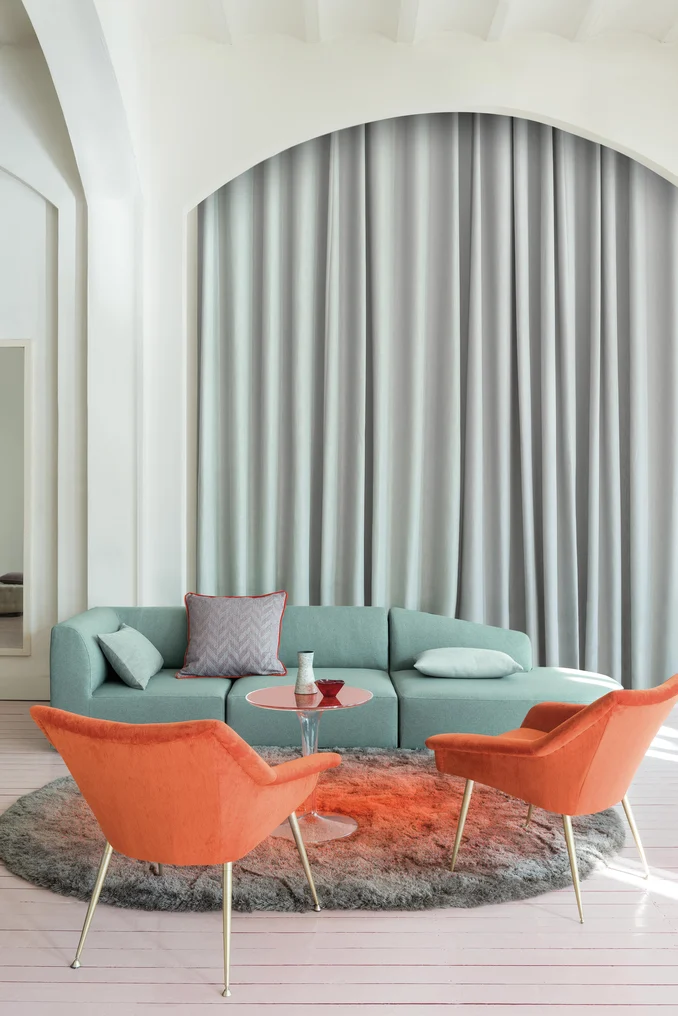


“The key and most important point for me is flexibility, and that’s what you are going to find going forward” - Olivier Delhomme

Journal
Reimagining hotels | Olivier Delhomme, FR-One
Where to from here? It is no secret that our world has changed dramatically since early 2020, however, many of these changes were already in process and only accelerated by the pandemic.
Hospitality and tourism are central to the lives of most people worldwide and these industries are built on the ability to preempt and adapt to guests’ wants and needs. We spoke to Olivier Delhomme, General Manager of FR-One, about the idea of the hotel in our modern world.
“The key and most important point for me is flexibility, and that’s what you are going to find going forward,” says Olivier.
Looking broadly at the hotel industry, whether there was a project on the drawing board or already part way through construction when the world shut down, we can see a three-year interruption in refurbishment. Even so, Olivier remains positive about the future, “when the doors reopen there will be a rush to renew. So, the biggest question for the owners will be how to renew it and what will be the purpose of the hotel?”
THE PURPOSE OF THE FACILITY
THE PURPOSE OF THE FACILITY
There are layers to the services, facilities, and price brackets offered by the hotel market, with added variety within individual properties.
“A statement you could keep true is the fantasy of the experience that you are going to provide to your customer, and obviously for existing concepts the difficulty is to adapt … I think it’s important in the creative process to pause, to look, and to have a deeper understanding of what is happening around you. I think that’s what makes the concept gel. Take time to look at what’s happening in the retail environment and society, and try to absorb that particularity all together.”
The concept of the ‘staycation’ is an opportunity for hotels which inhabit significant real estate and need to develop a sense of community. Alongside transient visitors are permanent or semi-permanent residents and local people utilizing restaurants, bars, and conference spaces. Therefore, you have to ask, “what kind of service do you want to offer?”
THE CONCEPT OF SERVICE
THE CONCEPT OF SERVICE
The factors underpinning a great hotel experience have remained consistent over the past centuries – comfortable, clean lodgings; friendly, amenable staff; nutritious, fresh food; modern facilities and technologies – while the way these needs are cared for has evolved with society.
Technological advancements have crept into almost every corner of our lives, and hotels are no exception. People are a must-have to run a successful business, however, now more than ever there are simply not enough workers, or they are unsatisfied by the hours and tasks required by the sector. Most people seek out employment which can not only support their lifestyle financially, but also enrich it in other ways. As the cost of work increases, “what is important with regard to the hoteliers is to find the balance between the service you give and the basic necessity of the business to be at least profitable.”
“So, there is a kind of colonization of the market – in the north of Europe the cost of employment has always been very high, so hoteliers have developed ways to provide service whilst using the maximum of facilities to have a minimum of staff.” Olivier considers it a DIY approach; the room key is linked to your cellphone, and you can visit a hotel without interacting with another person if you so wish.

THE BUSINESS OF TRAVEL
THE BUSINESS OF TRAVEL
The pandemic has dramatically increased the necessity for, and our acceptance of, remote work. For many of us it is engrained in our lifestyle and reverting to traditional 9-5 office hours will be an unwelcome readjustment.
This increased ability to video conference combined with a growing awareness of carbon emissions has formed a dark cloud above the concept of business travel. But how, then, will hotels who cater predominantly to these guests adapt? “While speaking with an American friend, he was saying ‘we used to have twelve hotels catering to business travelers around the town, doing exactly the same thing. Do we need twelve?’ so that’s where the pain will come through – we need to analyze and see how those companies can survive.”
Olivier highlights the need for curiosity in design thinking. “I think a hotel shouldn’t be an island for business travelers, it has to be part of the texture and network of the community to have a purpose as such. Because you cannot just rely on one type of traveler. You could argue that it is the same for a tourist hotel – if there are no tourists, what do you do?”
SHARED SPACES & MODERN IDEAS
SHARED SPACES & MODERN IDEAS
Reconsidering the way space is used when designing bedrooms or suites allows for all the phases of a normal day to take place in one room. For example, a room can be transformed into a day-office with a business format or a personal gym by incorporating a ‘disappearing bed’ which folds against the wall or into the ceiling. Alternatively, the room can house a multi-service bar which acts as a ‘detox bar’ during the day, complete with the amenities for a healthier life, and an ‘intox bar’ in the evening, offering facilities for indulgence, in moderation of course.
Creative design is even more important when the concept is not luxury and therefore the amenities need to be offered in public areas, where you can cater to guests and provide service.
In mid-range hotels across France there is an increased offering of family-friendly accommodation. Those within tourist locations have the capacity to welcome both immediate and extended families into flexible, viable spaces which grow in accordance with your needs as ‘bedrooms’ can expand to accommodate 2, 10, or even 20 guests.
Hoteliers and designers are challenging the concept of hospitality by creating purpose-built properties, rather than remodeling existing structures. Instead of focusing on ‘single portion people’ with services tailored to the individual, there has been a realization that we are social beings in search of a communal lifestyle. “I think the hoteliers are very curious and questioning what will be the best format for the future. Flexibility – this is what is going to happen; what kind of room do I need?” asks Olivier.
CO-WORKING & CO-HABITING
CO-WORKING & CO-HABITING
The Student Hotel is making waves across Europe because of its diverse offering, selling the idea that you can be student your entire life if you simply remain curious.
With an inviting website and digital nomad tags, The Student Hotel have built a sense of community which epitomizes their ethos. Properties provide student accommodation with rooms for rent in periods of 6, 9, 10 months, for example, without the burden of a year long lease for a room you do not use over the summer. During the ‘off-season’ the hotel has increased space available, and thus acts more like a traditional hotel catering to people working on extensive projects in the area. The property also creates space for coworking, meetings, and activities year-round.
The Student Hotel is a modern, curious concept built on the idea that we are all learners, thus they focus on sustainability and education. The Sustainability Manager sources local construction materials and local produce for the facility, and pursues the formation of a sustainable community where people of all ages can mix, learn, and enjoy activities. During the pandemic The Student Hotel addressed the mental health issues of residents by offering support services such as counselling, to further develop the idea of what it really means to offer a place of habitation and refuge to people.
With great change comes a great opportunity to reimagine the world we want to live in, the services we want to offer and enjoy, and the spaces we want to inhabit, both permanently and temporarily. In more flexible spaces we can experience a fuller, more flexible life, together.
It is common knowledge that the fashion and furnishing textiles industries are large global polluters, from the growing of plants like cotton, to the dying of yarns, and the amount of product sent to landfill, there are many areas in which change is urgently required. As a furnishing textiles dis...
