An historic embroidery technique with modern appeal

Journal
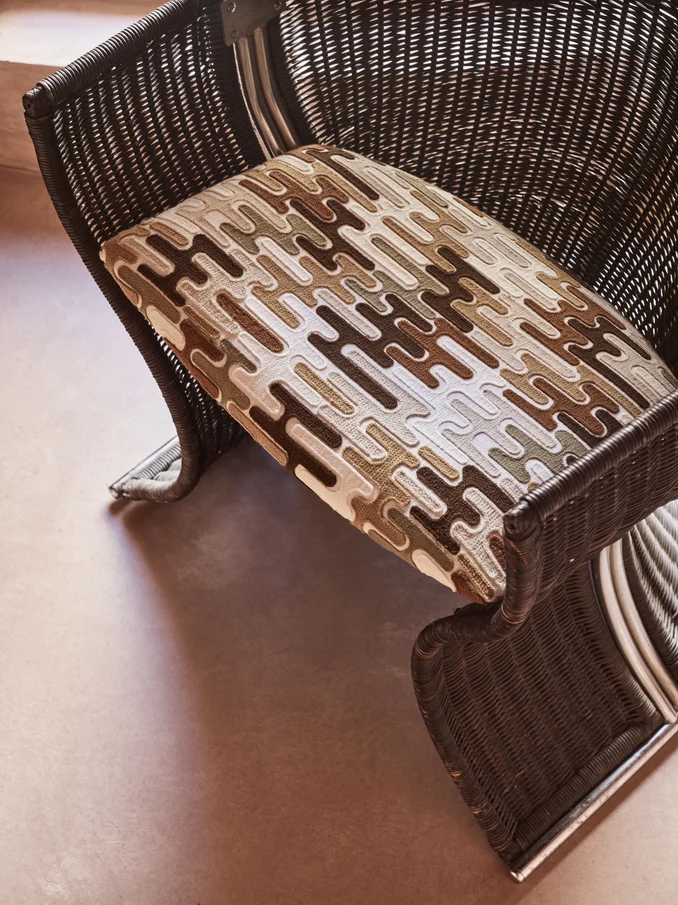
Plan B colour Tobacco by Zinc Textile
Crewel intentions
One of the earliest forms of decorative surface embroidery, crewel (or crewelwork) derives from the Welsh word for wool and dates back over one thousand years.
Traditionally crafted with thick, worsted woollen yarn on a sturdy linen twill ground, crewel encompasses various stitches from simple chain and stem to complex silk shading, bullion knots, and even free stiches of any length or direction. Due to the weight of the finished cloth, crewel textiles made for durable curtains, upholsteries, and bedding.
The technique found great popularity in the United Kingdom and United States during the 17th century, before being usurped by alternative decorative crafts like lacemaking. Crewel was made modern once more in the flower power 60s and 70s, and in recent seasons has regained its place in the collections of esteemed textile editors.
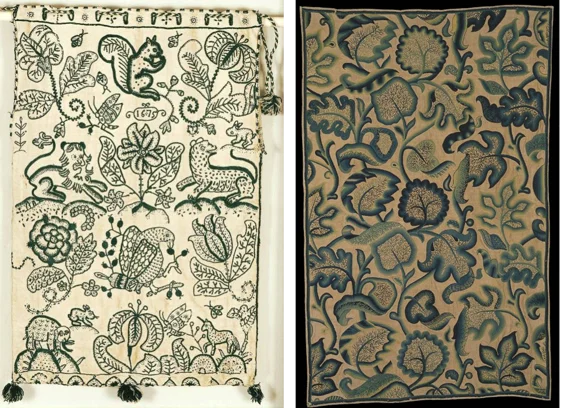
Elizabethan Crewel workbag, 1675, Colonial Williamsburg Museum | Jacobean Crewel curtain, c. 1600-1700, V&A Museum London
The Bayeux Tapestry
The Bayeux Tapestry
Said to have been embroidered by Queen Matilda, wife of William the Conqueror, the Bayeux Tapestry depicts the events foreshadowing the Norman Invasion, 1066 Battle of Hastings, and William the Conqueror’s subsequent ascension to the throne of England.
The Bayeux Tapestry is the oldest surviving example of crewel embroidery, commissioned in 1077 to decorate the new cathedral of Bayeux it was hung in the nave once a year and conserved in a wooden chest for the remainder.
At almost 70m long it features 58 embroidered vignettes of everyday life in medieval Europe. Amongst the 626 characters and 202 horses, Viking ships, mythical creatures, Norman war cries, and Halley’s Comet are depicted in an array of stitches including stem, chain, and herringbone.
After seven centuries in the Cathedral’s treasury and careful preservation during World War II, the Tapestry has been on display in its own museum, the Seminary of Bayeux, since 1983.
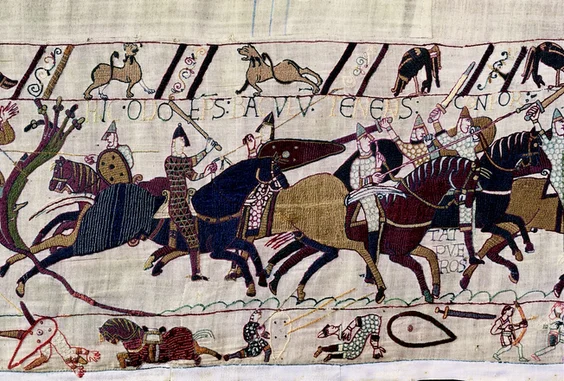
The Bayeux Tapestry, 1077, Seminary of Bayeux
Jacobean Crewel & the Tree of Life
Jacobean Crewel & the Tree of Life
Queen Elizabeth I was proficient in embroidery and in the mid-1500s established the Keepers and Company of the Arte and Mystery of the Broderers of the City of London – the embroidery guild which set and maintained the standards of crewel work across the kingdom.
Unlike the delicate Elizabethan style, Jacobean crewel was bold, multi-coloured, and greatly inspired by the early 17th century exploration of the New World during the reign of King James VI and I (1603-1625).
These compositions often featured twisting branches adorned with fruits and floral motifs, referencing the ancient Tree of Life designs popular in Indian and Sri Lankan palampores (calico bedcovers).
Interpretations of the Tree of Life have appeared across cultures and religions for thousands of years, from Egyptian mythology to Hinduism, Judaism, Buddhism, and Christianity, but became widely popular in Western Europe due to colonisation and the boom in global trade made possible by the East India Company.
From textiles to wallcoverings and accessories the Tree of Life was adapted by artisans in both Asia and Europe to appeal to new markets. English embroiderers added animals and insects when reinterpreting traditional prints and introduced diverse stitching techniques to create depth and shading within the design. Coloured in naturalistic shades of green, blue, yellow, brown, and red on an off-white linen ground, these textiles were generally used as wall hangings in homes.
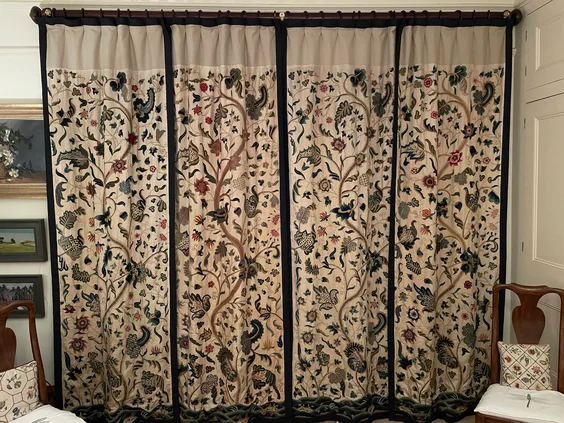
Jacobean Crewelwork curtains c.1880. Worked during the Jacobean Crewelwork revival of the Arts and Crafts movement, restored by RSN Embroidery Studio.
Modern Crewel
Modern Crewel
The popularity of crewelwork caught the eye of our International Brands Manager at Paris Deco Off. She noted that “embroidery continues to grow at every level of the market but has evolved to include raw iterations such as crewelwork in design styles as broad as traditional, geometric, modern art, and global craft.”
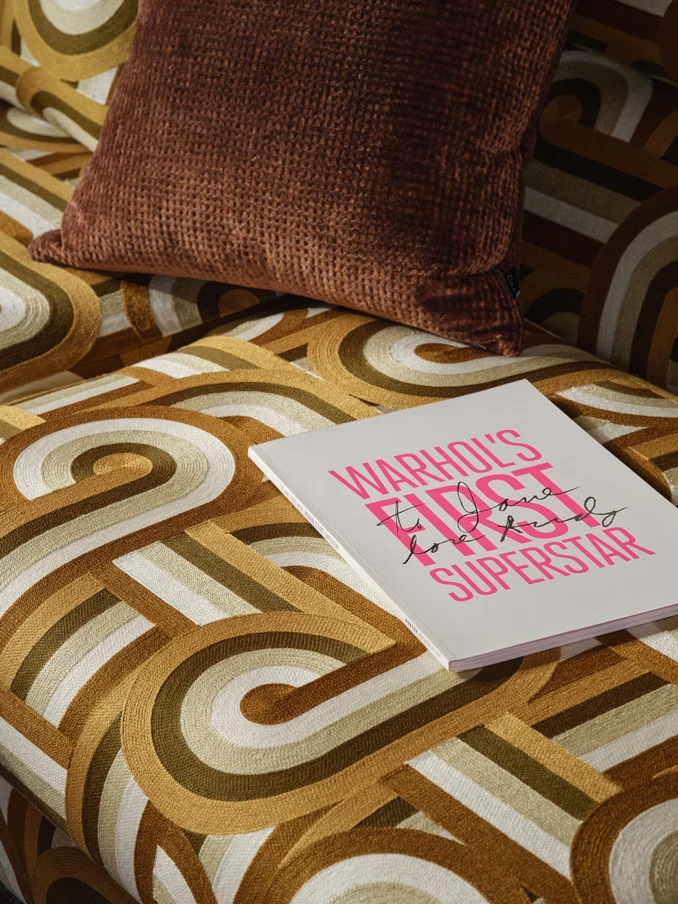
Just as she observed, we’re seeing crewel come through in force in the collections of Zinc Textile and Mokum.
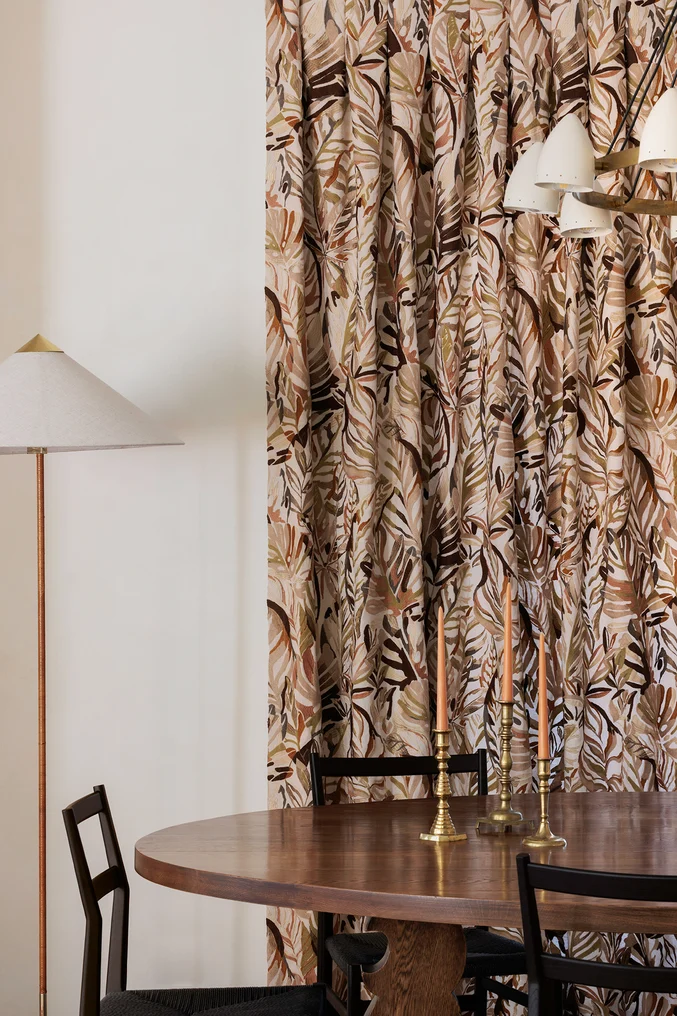
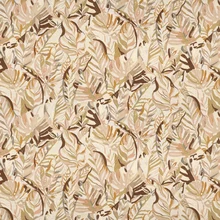
Hero design of Mokum’s Soleil Voyage collection, Cordia reimagines tropical foliage as a collage of leaves unfurl across the natural linen base cloth. Incorporating crewel chain stitching into a dynamic interplay of matte and lustrous yarns to create a detailed embroidered textile with depth and tactility.

Soft to the touch, resilient to wear, flame-resistant, washable, hypoallergenic, available in a vast natural palette, and beautifully receptive to dyes, wool is an exceptional fibre in every sense of the word. One of the first fibres to be woven into textiles, wool continues to be a favourite in ...