
“My visit to New York reinforced our desire to design textiles which embrace creativity with positivity and confidence."

Journal

Stephanie Moffitt, Mokum Design Director

Curtains in Colour Field colour Clay, sofa in Modernist colour Blush, Ottoman in Pietre colour Calico

Curtains in Gouache colour Raw Sienna
Designing the Modern Art collection
Stemming from a desire to inject colour and pattern into the brand’s wider range, the Modern Art collection was greatly influenced by the ideas behind the Abstract Expressionist movement, which placed New York at the centre of the art world in the 1940s and 50s.
In addition to cultural similarities between the post-WWII era and our own post-pandemic experience, revolutionary techniques such as colour field painting and the diverse yet intrinsic ways of hanging artworks inspired Stephanie Moffitt, Mokum Design Director, when creating the collection.

Curtains in Assemblage colour Burnt Umber, chairs in Modernist colour Mahogany, modular in Modernist colour Blush cushions left to right in Modernist colour Blush, Impastare colour Bronze, Modernist colour Mahogany
How did your visit to The Met and MoMA influence the range?
How did your visit to The Met and MoMA influence the range?
Before visiting New York, I was researching paintings by artists including Helen Frankenthaler, so seeing her work in person at both galleries was such a privilege. To have researched an artist online and then be able to stand in front of their pieces never gets old. That type of thing is always so stimulating and the more you know about an artist or a work, the more you see. Looking at the painting technique and hearing how she poured paint and soaked it into the canvas, it was very cool.
I then discovered Sam Gilliam, who’s work I had not seen before. I was really taken with his abstract prints on fabric – his combination of the painting with the installation, the shadow, and the light, and although his works are very political, to me they were just beautiful.
What was it about Abstract Expressionism that you connected with?
What was it about Abstract Expressionism that you connected with?
Many of these artists came from Europe and left their history behind when they went to America to start something new. So, there’s a real sense of freedom and the luck of being alive. That’s the strange coincidence of these global events – not only was there the war, but it was followed by the atom bomb. It's the idea of creating a sense of the future whilst knowing the world could blow up, which is similar in the sense of the pandemic – it's just hanging over you the whole time.
At the same time, there was the growth of downtown New York. The concept of abstract expressionism was born there and placed the city at the centre of the contemporary art scene. Therefore, seeing those artworks in New York tied all the pieces together – it was captivating.


What does ‘creative confidence’ mean to Mokum?
What does ‘creative confidence’ mean to Mokum?
Initially, creative confidence was about coming out of the pandemic in an industry that was very lucky. We resurfaced ready to confidently enhance the relationships people had formed with their interior spaces.
When people were locked down, they saw the value of their homes and what they could give them; not only in terms of comfort but by creating an environment that positively impacts them in an emotional way. And that's what many of the abstract expressionists (particularly Rothko and the colour field paintings) were trying to create – works of art that inspired an emotional response.
The Modern Art range is selective with colour, but that's the point. Colour confidence isn’t about being crazy bold, it’s about feeling confident in your choices and confident in your style, it doesn't need to be neon.
How has the Mokum handwriting evolved in recent collections?
How has the Mokum handwriting evolved in recent collections?
Mokum’s collections are always developed from an overarching theme, but even if that theme is ancient, like the cranes in Ikigai, we introduce contemporary elements into the design. It could be a change in scale or the replication of highly decorative motifs on a casual linen – it's the juxtaposition of these elements which changes how they're perceived.
Tactile upholsteries are central to the collection, what inspired you to include so many variations?
Tactile upholsteries are central to the collection, what inspired you to include so many variations?
Our love of weave is always central to our collections – adding woven structures can make simple designs beautiful. We explored our love of weave in Modern Art, for example, by enhancing simple checks with customized yarns and finishes.
Incorporating these woven designs ensures the collection has negative space for designs like Colour Field to take shape, but it also ensures comfort. When people are building a scheme, they want to have different heights, different surfaces, different colours, layers of sheen or matte. So, we took this idea of layering and looked at it from a weave perspective.
Over the next couple of years, we will design even more complexity into our upholsteries. Via yarn, small- and mid-scale patterns, innovative finishing processes, or recycled fibres to ensure our range encompasses a variety of qualities, scales, and dimensions.


Which interior design trends have caught your eye recently?
Which interior design trends have caught your eye recently?
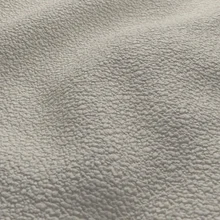
We're seeing a reemergence of chenille, as an evolution of our love for design influences from the 1970s to 90s. I think we’ll see a similar trajectory to boucle, which has got bigger and more colourful. I imagine it will get big in terms of height because people are enjoying that sense of comfort, which I don't think we will move away from for a while yet. We wanted Modernist to begin from where we think it will go, which is why we invested in a deep, extensive colourline.
We’re growing beyond the mid-century obsession and developing a love for 1980s and 90s design, with the return of chrome furniture and stainless steel, for example, but we're also seeing designers in Australia referencing nostalgic films from that period.


Marlow and Finch are Sydney-based window and soft furnishing specialists who work closely with architects, designers, developers, hospitality groups, and homeowners to create bespoke solutions for high-end residential and commercial projects across Australia. Recent noteworthy projects include th...
