
Our enduring love for linen textiles
Journal

Kanji by James Dunlop | Piece dyed pure linen, airo finished
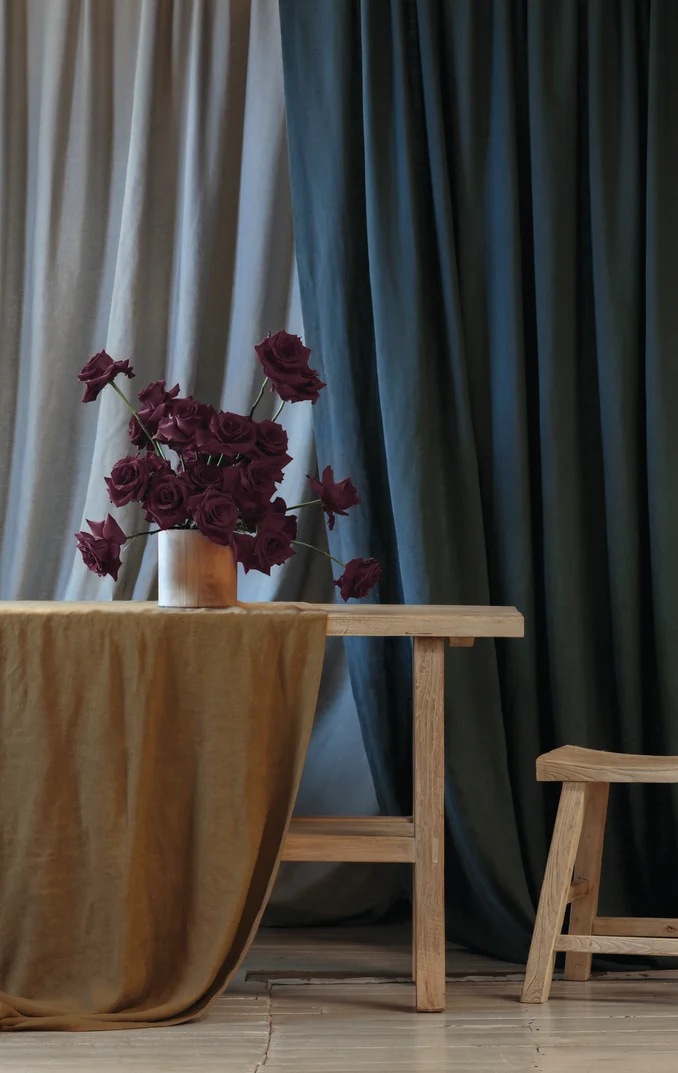
Satori Stonewash by Mokum | Piece dyed pure linen, stonewashed and airo finished
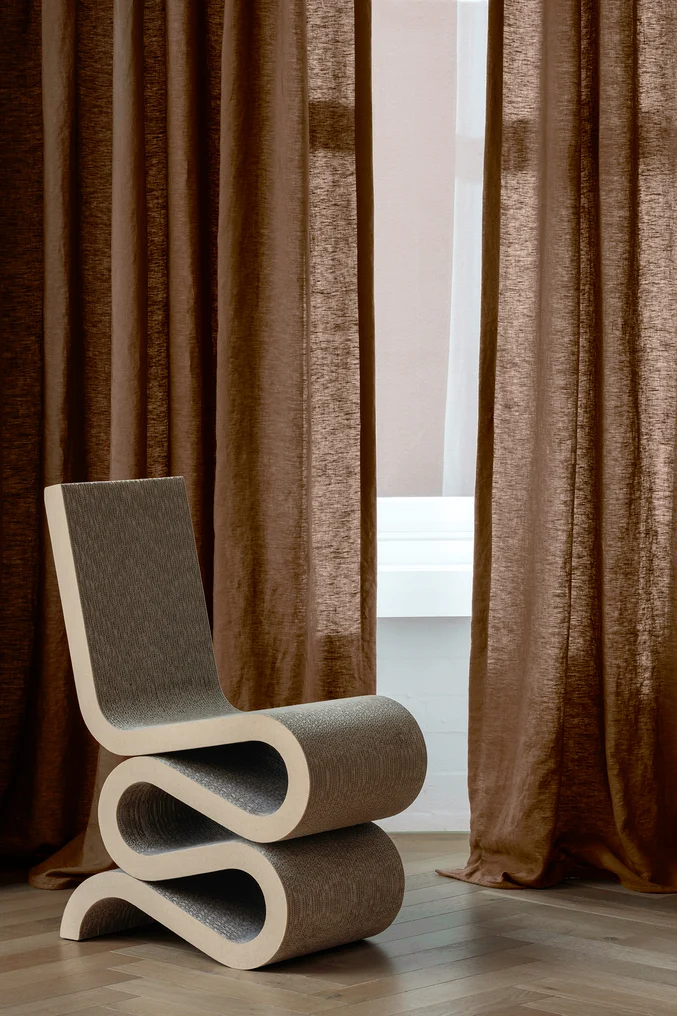
Gouache by Mokum | Piece dyed pure linen, airo finished
For the love of linen
Linen is revered for its casual sophistication, organic texture, and inherent characteristics across fashion and interior textiles.
The connection between linen and the skin is energetic. It’s impossible to replicate the feeling of a high-quality linen textile; its unique texture, the way it moves, even the alluring sound it makes when tousled.
Join us as we delve into the wonderful world of linen, exploring its origins and unravelling its many inherent characteristics.
THE FIBRE
THE FIBRE
Linen is derived from the cellulose fibres within the stalks of the flax plant, one of the world’s first cultivated plants. After processing, these fibres are spun into yarn then woven into fabric.
Until the late 1800s, linen was the world’s most important textile fibre. The industrial revolution and increased efficiency of textile production caused it to be replaced by cotton as it was easier to grow and process. However, linen is considered more environmentally friendly than cotton as it uses a lot less water during the manufacturing process.
Linen is expensive to produce because the fibre production is slower than other natural fibres and often requires artisanal dyeing and finishing processes, adding further cost to the production. Another contributing factor to the rising cost is the fashion industries love affair with linen, increasing demand of a limited supply.
Textile mills all over the world continue to modernise this ancient fibre, providing us with an abundance of inspiring linen qualities and constructions. Working in partnership with the finest linen weaving mills from Belgium, Italy, and Turkey we continue to develop the highest quality textiles.
Linen is a smooth, lint-free fibre with beautiful natural lustre. It is highly absorbent giving it a wonderful ability to take dye.
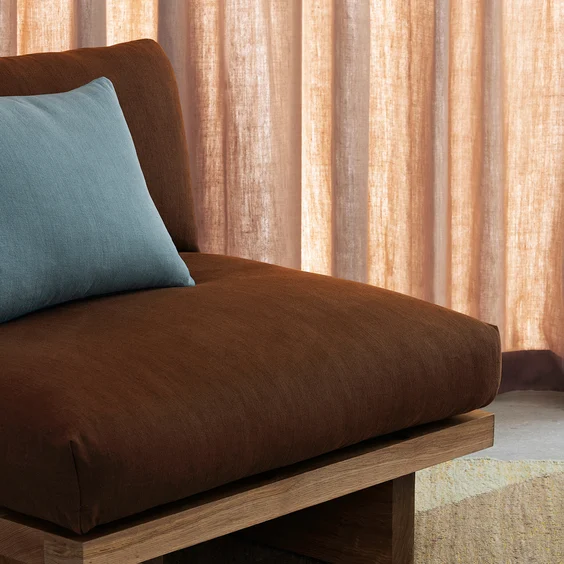
Eternal by Mokum | Yarn dyed 100% linen with an Airo finish
DYEING TECHNIQUES
DYEING TECHNIQUES
Colour can be applied to a fabric via numerous techniques and at different stages of the manufacturing process, the chosen technique will dramatically impact the way in which the finished fabric appears.
Textiles can be dyed as fibre, as yarn or as finished fabric.
Yarn dyeing is the dyeing of individual yarns before the fabric is manufactured, causing the fabric to showcase several colours in the woven design or texture. Yarn dyeing is used to create multicoloured checks and stripes with different colours in the warp and weft.


Piece dyeing is the dyeing of the fabric after it has been woven or knitted, also referred to as griege. Providing a single colour, this is the most used method of dyeing. Artisanal processes such as mixing chemicals with the dye bath can result in unique surface effects.


Linen base cloths provide a wonderful canvas for digital printing, which we favour for its flexibility, precision, and consistency. It is now possible to digitally print any design with photographic detail, without restricting the number of colours or subtle layers.
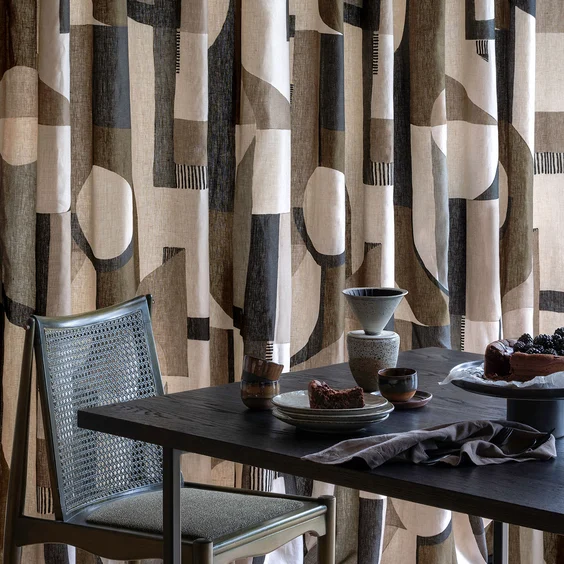
Bauhaus by James Dunlop | Digitially printed onto a 100% linen base cloth



FINISHING TECHNIQUES
FINISHING TECHNIQUES
Many finishing processes are used after weaving to improve the appearance, handle, or performance of a fabric. Each fabric may go through one, two, or multiple finishing processes.
Calendaring is created by flattening the yarn with large, high temperature pressure rollers. Increasing the smoothness and lustre by polishing the surface of the cloth, calendaring is vital in creating chintz and moire textiles.


Airo finishing (or Biancalani) transports the fabric through the machine via an intense airflow, before ejecting it into an impact grid positioned at the rear. Brutal as it may sound, this remarkable process discharges the accumulated kinetic energy to permanently soften the starchy linen fibre.


Stonewashing creates an organically aged look. The fabric is placed inside an industrial washing machine filled with pebbles, pumice stones, or other abradants, as the machine rotates the fabric is repeatedly thrashed to distress the surface. This artisan process creates a unique appearance that varies from roll to roll.


INHERENT CHARACTERISTICS
INHERENT CHARACTERISTICS
It is important to understand the inherent characteristics of linen to ensure appropriate specification and realistic expectations for your client.
Being a natural fibre, linen textiles have a personality. They will look, feel, and perform in a way that is consistent with their inherent characteristics and as such these natural ‘behaviours’ should not be considered a flaw of the fabric.
- Linen has an unrivalled organic texture and natural lustre, and if finished appropriately, can have an extremely soft handle
- Linen textiles are often washable – always refer to the product’s individual care instructions
- Linen offers anti-bacterial properties because it wicks moisture and dries much faster than other textiles
- Linen ‘breathes’ ensuring free circulation
- Linen fibres are hypoallergenic
- Linen moves and relaxes overtime, naturally improving with age through twists, bruises, wrinkles, and creases
- Extremely versatile, linen can be used for drapery, upholstery, cushions, bedding, and tableware
- A very durable upholstery, particularly when blended with synthetic fibres such as nylon
- When used in drapery application, linen provides a beautiful soft handle and elegant drape
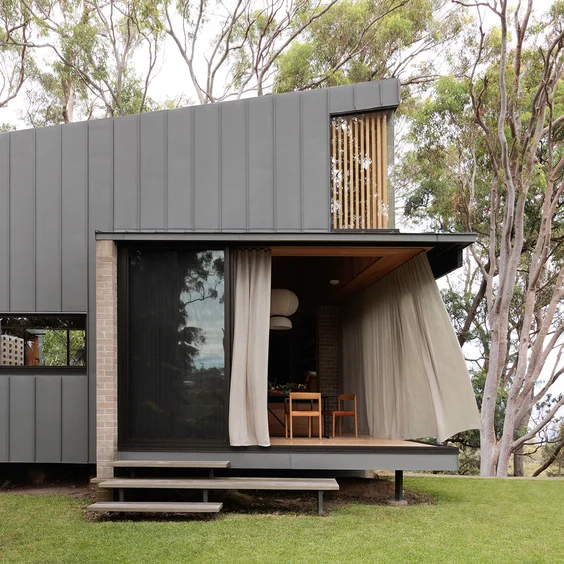
Laconia Air by James Dunlop | 100% linen with an Airo finish
Considerations
Considerations
- Linen can become stiff after washing but will soften again once thoroughly dried and aired
- It wrinkles, creases, and relaxes overtime which can create ‘sagging’ in upholstery application, therefore it is perfect for those who appreciate a relaxed wabi sabi aesthetic, but not for those who want smooth, tailored perfection
- As with all natural fibres, linen drapery should always be paired with a quality lining as it is susceptible to fading in direct sunlight
- An absorbent fibre, linen can move with changing humidity levels. In drapery applications we recommend puddling the drape to minimise the appearance of movement
- Linen fibre is smooth and lustrous, so seam slippage can occur with a heavy load. We recommend discussing the need for reinforcing upholstery seams with your upholstery manufacturer
TIPS AND TRICKS
TIPS AND TRICKS
As with all natural fibres, there can be slight variations in shade and tone across dye batches. If you require a perfect match across rolls, we offer a Cutting for Approval service (CFA) which provides your interior professional with a small memo cutting from our stock we hold to ensure the tone is right for your project.
‘Puddling the drape’ refers to manufacturing your curtains longer than required so the hem ‘puddles’ on the floor. A good rule of thumb is 100mm on the floor over a 2000mm drop. This creates a more relaxed look, particularly suiting heavier linens and disguising any movement. It is also beneficial to retain a generous hem, allowing for alterations if severe movement occurs.
If you are concerned about fading, opt for a lighter colour as fading will be less visible to the eye than darker shades.
The relaxed appearance of linen means it suits upholstery application as s loose cover. We recommend reinforcing upholstery seams to avoid seam slippage and it is always beneficial to regularly vacuum your upholstery to increase the lifespan of your textiles.
Watch our linen Instagram Live series on YouTube to learn more.
Suffusing elegance, comfort, and refinement Mokum’s luxurious Lama Velvet upholstery is a sustainable, undyed textile available in ten natural melange shades from ecru to caramel, chocolate brown, grey, and charcoal. The velvet pile is composed of the finest pure llama wool, producing a textile w...
