An insight into the complexities of yarn and piece dyed textiles

Journal
Bespoke colour development
There’s a contemporary yet casual sophistication to Australasian interior decorating which is enhanced by a shared love of simplicity, quality, and craftsmanship. As New Zealanders living in Australia, this perspective directly influences the work of our Mokum and James Dunlop Design Directors.
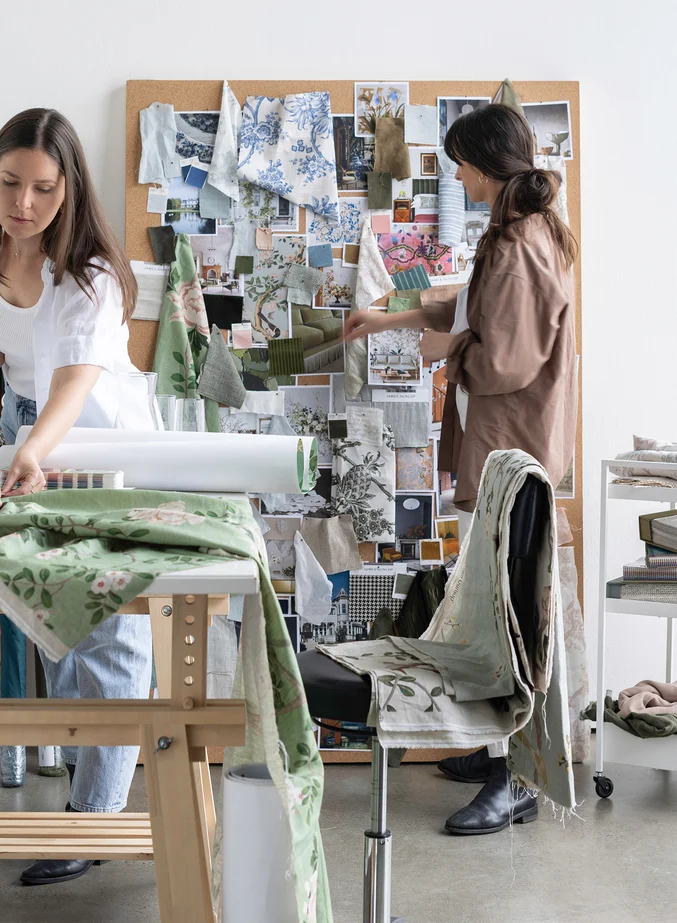
By developing custom colours, our palettes are perfectly placed within our home markets and provide a point of difference in export markets. In this article, we join our Design Directors in the studio to understand how our environment influences our colour preferences and how different dyeing techniques can produce different surface effects.
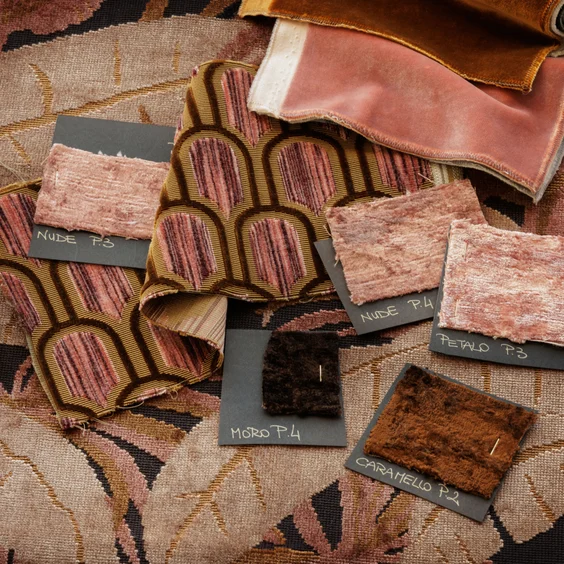
Custom colour palettes
Custom colour palettes
“Our unique environment impacts our lifestyle and shapes the way we live. Kiwis and Aussies are often regarded as relaxed and ‘easy going’ – there’s a casualness to how we live, speak, and design which is reflected in our preferred colour palettes too.” Says Stephanie Moffitt of Mokum.
Our perception of colour is influenced by the extremely clean, clear light which amplifies colour in this part of the world. Regarding Mother Nature as the ultimate designer, our studios borrow colours from flora and fauna to curate palettes reflective of the vistas beyond our windows – creating a relaxing, grounding atmosphere within the home.
Whilst we all gravitate towards organic, earthen shades, where Australians favour eucalypt or banksia leaf greens and warm desert tones of clay and terracotta, New Zealanders prefer mineral-toned blues and greens, emulating mountainous landscapes and rugged coastlines.
YARN DYEING
YARN DYEING
In this process the spun yarns are dyed and then woven into fabric. Textiles featuring multi-coloured yarns are yarn dyed.
When developing yarn dyed textiles, the studio sends colour instructions to the mill specifying their chosen warp and weft yarn colours. These colours either come from the mill’s ‘yarn bank’ (the library of colours stocked at the mill) or are custom colours, exclusive to our studios.
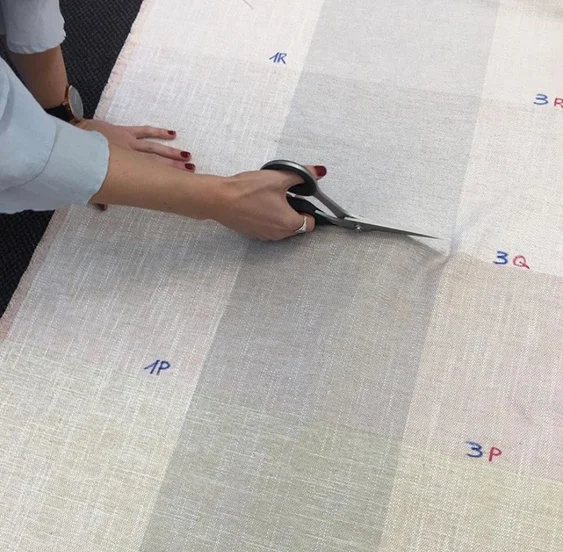
Yarn dyed colour blanket
The loom is threaded with the warp yarns before the weft yarns are trialled one after another, resulting in a giant ‘blanket’ that looks like a patchwork quilt. In the studio, the blanket is cut into colour groups and the process of elimination begins – whittling down the piles to finalise the curated colourline.
“The magic of yarn dyeing and creating these colour blankets is that we sometimes come across a beautiful mistake – where a combination of warp and weft which we hadn’t specifically requested is absolutely stunning and ends up in our final colourline,” says Annie Moir of James Dunlop.
A sophisticated yet accessible woven upholstery, Grounded is constructed from 100% polyester and yarn dyed for added complexity. Coloured in a pigmented palette of nature-inspired hues, this tactile plain is the perfect upholstery solution.


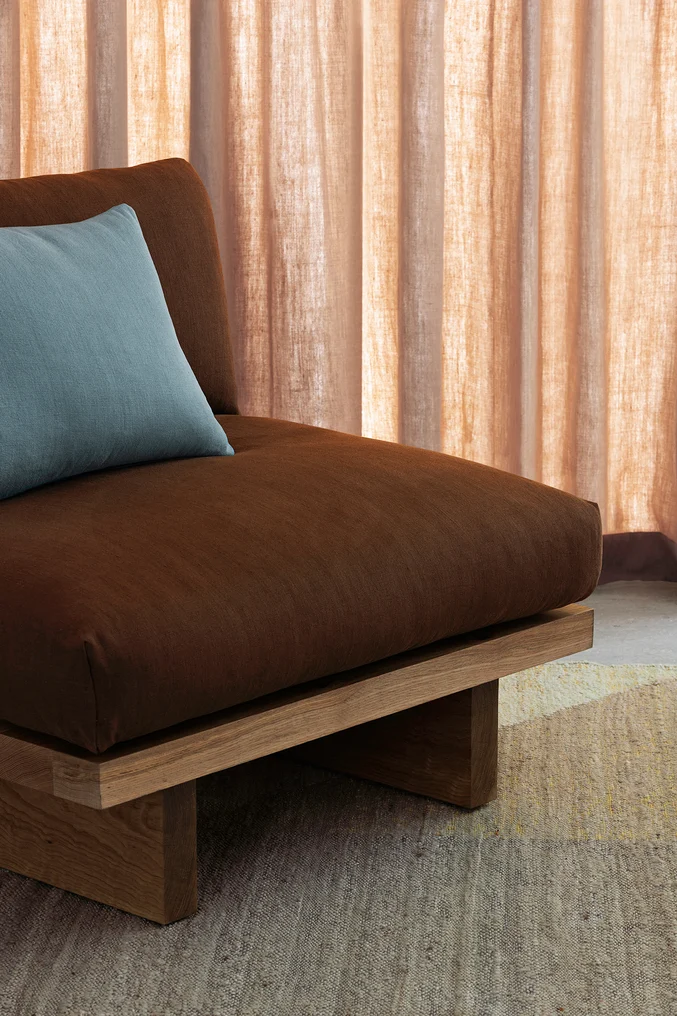
Woven in Turkey and beloved for its elegant, tumbled finish, Kyoto is James Dunlop’s signature pure linen wide width drapery. Yarn dyed and washable, Kyoto was recently recoloured to include shades of fresh white, duck egg, blush, pistachio, and ink alongside rich, earthen hues of oxide, rust, truffle and walnut.


Grande Boucle by Catherine Martin by Mokum
Grande Boucle is testament to our enduring nostalgia for the 1970s. Grande Boucle’s expanded colour palette includes burnt orange, bronze, chocolate brown, deep greens, and a bold peacock. A weighty and dimensional boucle upholstery, Grande Boucle is woven in Italy in a mix of natural and synthetic fibres, and expertly finished to ensure a soft, luxurious handle.


PIECE DYEING
PIECE DYEING
In this process the fabric is woven (referred to as ‘greige’) and then dyed in piece form. A range of finishing techniques can influence the surface effect of piece dyed products but overall, piece dyed textiles will be one colour.
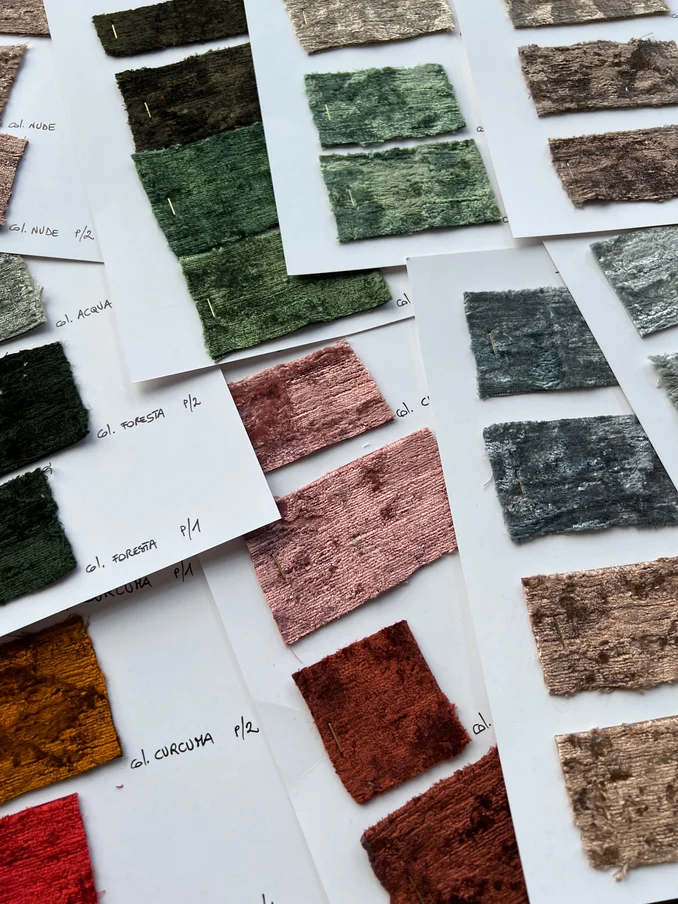
Firstly, the studio sends colour instructions and pantone references or physical fabric cuttings to the mill for colour matching, then the mill’s inhouse laboratory dye small pieces of the chosen greige construction (referred to as ‘lab dips’) for review.
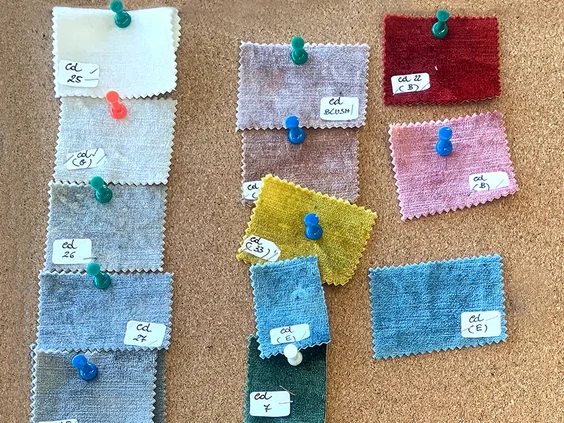
Lab dips of piece dyed velvet upholstery
Several rounds of colour trials may be required before the colourline is finalised. Like yarn dyeing, piece dyeing requires a slow process of elimination – meticulously reviewing and debating every shade – until the curated colourline remains. At this point, if possible, the mill will dye a reduced colourline of A4 swatches as colours tend to read differently in larger pieces, particularly when applied to a velvet pile or lustrous fabric.
Finishing processes are an important and extremely varied part of textile development, these are carried out after weaving to improve the textile’s appearance, handle, and performance. Many finishing processes influence the final colour of the fabric – especially when piece dyed – and due to the nature of piece dyeing, we have far greater flexibility when creating custom colours.
In an energetic palette and high-quality composition, Eternal is an everlasting Mokum classic. Artisan finishing provides a tumbled handle and antique surface interest to our multipurpose, piece-dyed, pure linen plain. Fresh and earthen neutrals ground the revitalised palette of 33 colours. 15 expressive new mid-tones and trend infused colours reference our Modern Art collection, whilst coastal blues, Pacific soaked teals, and immersive greens offer insight into our future ranges.


With the growing trend of curvaceous furnishings in the interior space, Alpaca Velvet is the perfect solution for both residential and commercial schemes. Our luxurious wool blend velvet is woven in Italy and has been recoloured in a fashionable and forward-thinking palette. Seven existing colours sit alongside fifteen new custom dyed shades. With its deep, dense pile Alpaca Velvet delivers a sophisticated treatment to both modern and classic applications.


Woven in Turkey, Reverie expertly blends the soft feel of tumbled linen with the practicality of polyester. Piece dyed in James Dunlop’s custom colour palette to deliver sophistication and decorative colour to all levels of the market, this 320cm wide sheer is practical and highly accessible.


The final palette
The final palette
The final colour selection of any new development balances the analysis of historical sales data and trend forecasting to drive our palettes forward in fashionable and thematic shades. On average, people redecorate their homes every 10-15 years, so we are always mindful that the design and colour palettes of our textiles must be both timely and timeless. Therefore, we prioritise a comprehensive offering of both warm and cool neutrals in our colour developments, before introducing trend tones.
Throughout this process we ensure these colourways complement the plain drapery and upholstery designs within the wider thematic collection as well as previous ranges, resulting in holistic and agile textile solutions.
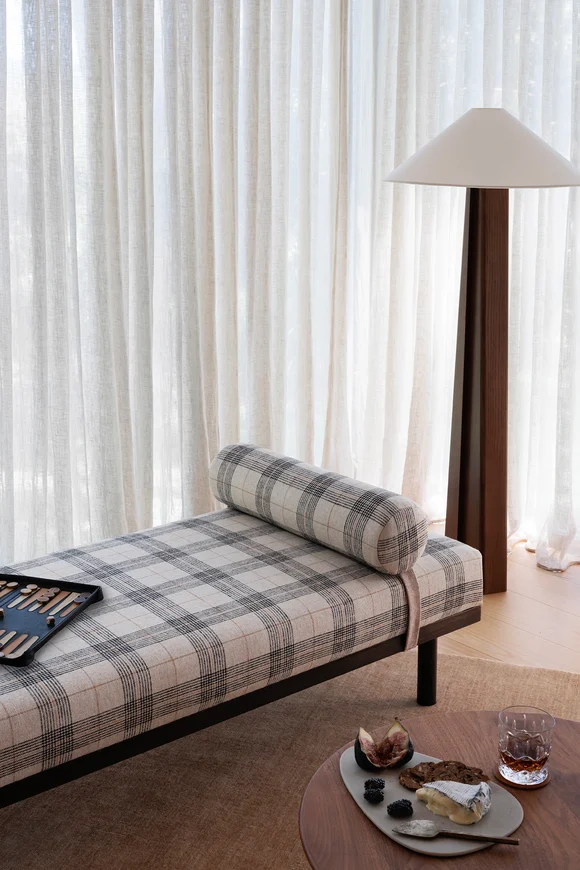
Plaids and checks are classic textile designs that can be identified by the complexity of the pattern and their unique historical origins. In this article we decipher these terms, the differences between tartan and Scottish tartan, and identify these patterns within our expansive textile range.