


An artisanal approach to textiles

Journal
Wabi sabi | The imperfection of craft
An appreciation for the organic aesthetic of handcrafted fabrics remains close to the heart of textile enthusiasts.
Whilst the current romanticism of handloom and embroidery techniques is an extension of interior trends like Wabi Sabi or Cocooning, taking an artisanal approach places greater emphasis on the traditional processes of fabric creation and their mesmerising imperfections.
Historically, craftspeople were not exclusively found in workshops, many were nomadic apprentices and merchants who followed the demand for their services and supported renown masters. And although pieces of furniture, baskets, and textiles were functional, they were almost always decorative as well – expressing the progression of art and culture across society.
Constructing items through largely forgotten manufacturing processes, or those inspired by them, evokes awe and reminds us of the immense time, care, and skill that’s required by craft. The following textile designs explore a selection of artisanal approaches, celebrating craftsmanship and our nostalgic connection to the past.
Handblock by James Dunlop
Handblock by James Dunlop
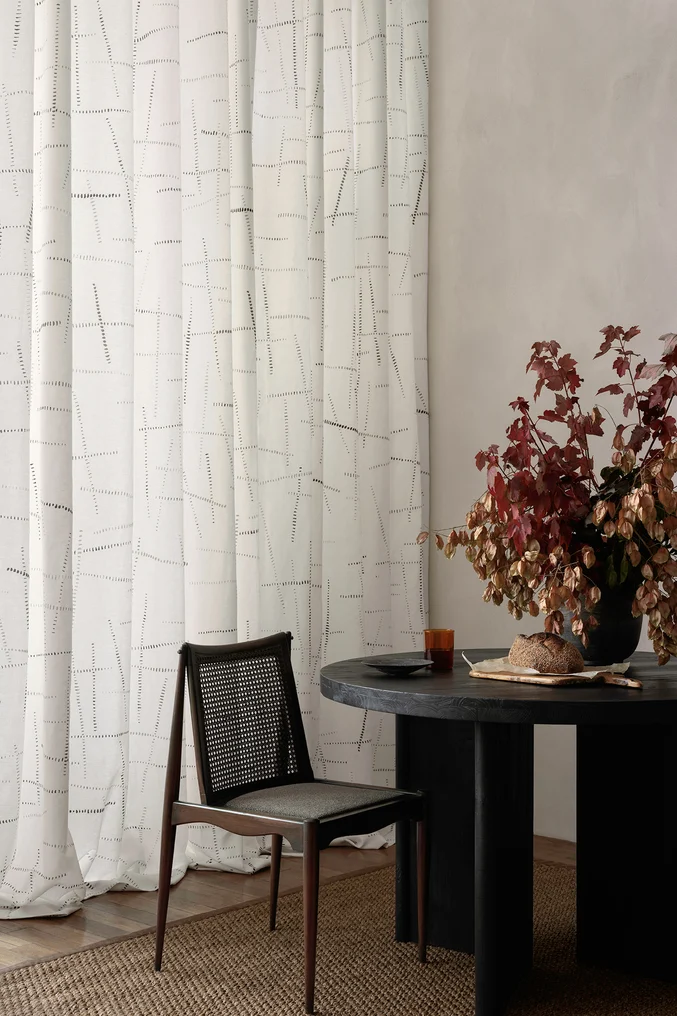
Our original hand painted design has been printed in Spain onto a natural, cotton linen base cloth. At home within warm or cool residential schemes, abstract strokes in subtle, neutral tones create a drapery design that feels at once graphic and organic.

Assemblage by Mokum
Assemblage by Mokum
In a modern and unconventional take on the medium of collage, embroidery stitching, playful fringing, and geometric shapes are assembled into a soft rhythmic stripe. The natural ground of Assemblage’s pure linen base cloth contrasts with the fine, lustrous stitching that embellishes it.


Scandi by James Dunlop
Scandi by James Dunlop
Blending the imperfection of Japanese wabi-sabi with Scandinavian minimalism, Scandi is a soft, geometric striped sheer crafted in a fil coupé construction. Abstract motifs are woven tone on tone for subtle sophistication in three soft shades.


Jungle Room by Mokum
Jungle Room by Mokum
Jungle Room features botanical motifs, reimagined into an exquisite, tropically infused embroidery. Multiple stitching techniques overlay the plant and flower motifs, adding complexity and richness to the pure linen base cloth – a natural, slightly rustic foundation for the contrasting gentle sheen of the embellishment.


Quadrata by Mokum
Quadrata by Mokum
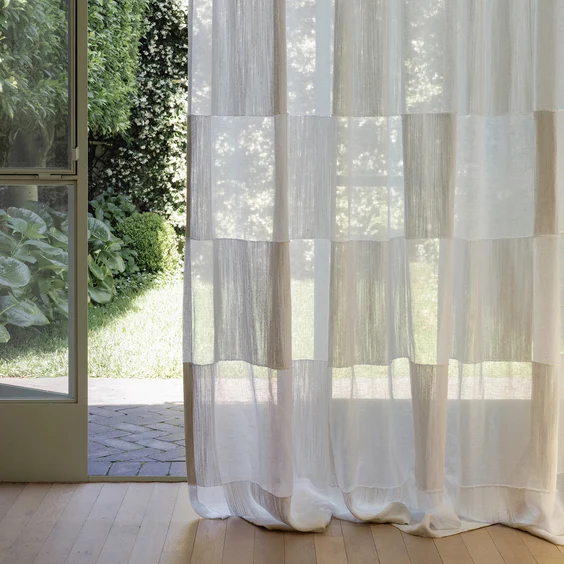
An elementary large check is enhanced by transparency, tactile yarn, and a sublimely soft drape. The fil coupe weave technique, ‘fil’ meaning the weft yarn and ‘coupe’ meaning cut, was the perfect solution to create this translucent and textural geometric sheer. The clipped yarns are brought to the face of the sheer to add further dimension and energy to the finished design.


Tennessee Tussah by Catherine Martin by Mokum
Tennessee Tussah by Catherine Martin by Mokum
Named after Elvis’s home state, Tennessee Tussah references the raw silk and handloomed textiles of the 1970s, a period which embraced hand crafted design. Tennessee Tussah is an artisanal textile with custom piled viscose yarns, hand woven in India it will be loved by those who appreciate the beauty of its inherent imperfection.


Grassland by Mokum
Grassland by Mokum
Taking inspiration once more from shibori techniques, the subtle pattern within our rhythmic Grassland design comes from a shibori dyed Kimono. Grassland is a tactile wide-width drapery, where beauty in simplicity is celebrated, encouraging mindfulness, slowness and reflection. The refreshed and refined colour palette includes two new natural colours, Sand and Jute, to sit alongside Ecru. Grassland exudes organic elegance with its beautiful weight and soft handle.


A triple weave or dimout fabric is an advanced lining construction comprised of three tightly interwoven layers. The central layer is key to the structure, as black yarn is used to restrict the amount of light passing through the fabric. Generally textured and soft to the touch, triple weaves are...
